Writing and Printing
History of Miami
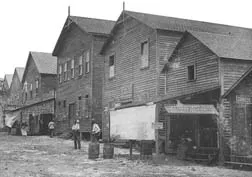
Thousands of years before Europeans arrived, a large portion of south east Florida, including the area where Miami, Florida exists today, was inhabited by Tequestas. The Tequesta (also Tekesta, Tegesta, Chequesta, Vizcaynos) Native American tribe, at the time of first European contact, occupied an area along the southeastern Atlantic coast of Florida. They had infrequent contact with Europeans and had largely migrated by the middle of the 18th century. Miami is named after the Mayaimi, a Native American tribe that lived around Lake Okeechobee until the 17th or 18th century. The Spanish established a mission and small garrison among the Tequesta on Biscayne Bay in 1567. The mission and garrison were withdrawn a couple of years later. In 1743 the governor of Cuba established another mission and garrison on Biscayne Bay. As the mission had not been approved by the Council of the Indies, the mission and garrison were withdrawn the following year. The Spanish recorded that the inhabitants at the site of the 1743 mission were survivors of the Cayos, Carlos (presumed to be Calusa) and Boca Raton people, who were subject to periodic raids by the Uchises (native allies of the English in South Carolina). Fort Dallas was built in 1836 and functioned as a military base during the Second Seminole War. The Miami area was better known as "Biscayne Bay Country" in the early years of its growth. The few published accounts from that period describe the area as a wilderness that held much promise. The area was also characterized as "one of the finest building sites in Florida". After the Great Freeze of 1894, the crops of the Miami area were the only ones in Florida that survived. Julia Tuttle, a local landowner, convinced Henry Flagler, a railroad tycoon, to expand his Florida East Coast Railway to Miami. On July 28, 1896, Miami was officially incorporated as a city with a population of just over 300. Miami prospered during the 1920s, but weakened when the real-estate bubble burst in 1925, which was shortly followed by the 1926 Miami Hurricane and the Great Depression in the 1930s. When World War II began, Miami played an important role in the battle against German submarines due to its location on the southern coast of Florida. The war helped to increase Miami's population to almost half a million.
Also on this shelf
Incunable.
Alfred Harmsworth, 1st Viscount Northcliffe.
See also
Uncatalogued shelfText from Wikipedia; plate via Wikimedia Commons. Text CC BY-SA 4.0; plate freely licensed (see Commons). Source record. Images and catalogue data are reproduced from open-access collections.