Writing and Printing
Dissolution of the Ottoman Empire
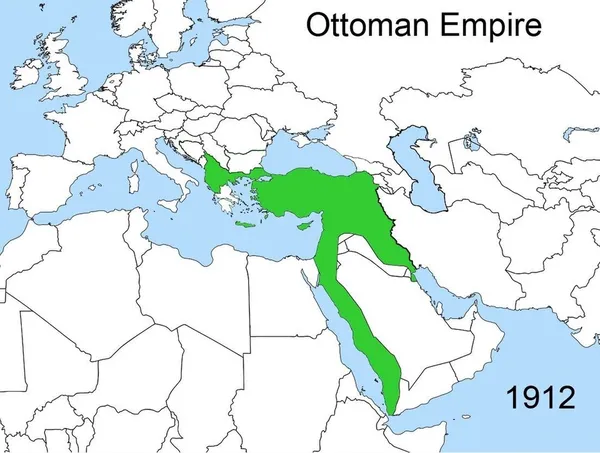
The dissolution of the Ottoman Empire (1908–1922) was a period of history of the Ottoman Empire beginning with the Young Turk Revolution and ultimately ending with the empire's dissolution and the founding of the modern state of Turkey. The Young Turk Revolution restored the constitution of 1876 and brought in multi-party politics with a two-stage electoral system for the Ottoman Parliament. At the same time, a nascent movement called Ottomanism was promoted in an attempt to maintain the unity of the Empire, emphasising a collective Ottoman nationalism regardless of religion or ethnicity. Within the empire, the new constitution was initially seen positively, as an opportunity to modernize state institutions and resolve inter-communal tensions between different ethnic groups. Additionally, this period was characterised by continuing military failures by the empire. Despite military reforms, the Ottoman Army met with disastrous defeat in the Italo-Turkish War (1911–1912) and the Balkan Wars (1912–1913), resulting in the Ottomans being driven out of North Africa and nearly out of Europe. Continuous unrest leading up to World War I resulted in the 31 March Incident, the 1912 Ottoman coup d'état and the 1913 Ottoman coup d'état. The Committee of Union and Progress (CUP) government became increasingly radicalised during this period, and conducted ethnic cleansing and genocide against the empire's Armenian, Assyrian, and Greek citizens, events collectively referred to as the Late Ottoman genocides. Ottoman participation in World War I ended with defeat and the partition of the empire's remaining territories under the terms of the Treaty of Sèvres. The treaty, formulated at the conference of London, allocated nominal land to the Ottoman state and allowed it to retain the designation of "Ottoman Caliphate" (similar to the Vatican, a sacerdotal-monarchical state ruled by the Catholic Pope), leaving it severely weakened. One factor behind this arrangement was Britain's desire to thwart the Khilafat Movement. The occupation of Constantinople (Istanbul), along with the occupation of Smyrna (modern-day İzmir), mobilized the Turkish national movement, which ultimately won the Turkish War of Independence. The formal abolition of the Ottoman Sultanate was performed by the Grand National Assembly of Turkey on 1 November 1922.
Also on this shelf
Hindi–Urdu controversy.
Anthem of the Moldavian Soviet Socialist Republic.
See also
Uncatalogued shelfText from Wikipedia; plate via Wikimedia Commons. Text CC BY-SA 4.0; plate freely licensed (see Commons). Source record. Images and catalogue data are reproduced from open-access collections.