Writing and Printing
History of Poland
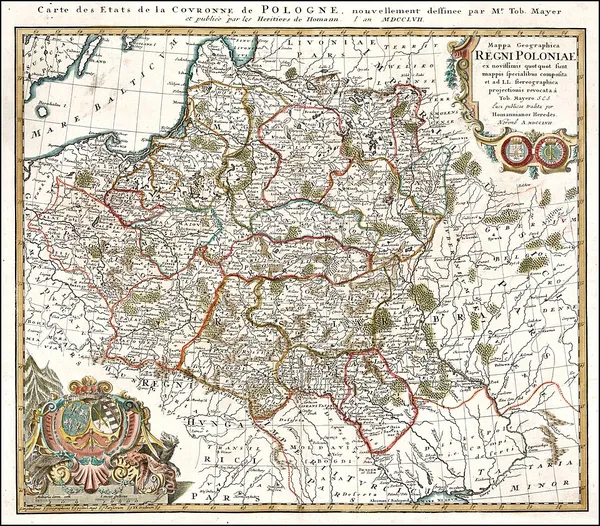
The history of Poland spans over a thousand years, from medieval tribes, Christianization and monarchy; through Poland's Golden Age, expansionism and becoming one of the largest European powers; to its collapse and partitions, two world wars, communism, and the restoration of democracy. The roots of Polish history can be traced to ancient times, when the territory of present-day Poland was inhabited by diverse ethnic groups, including Celts, Scythians, Sarmatians, Slavs, Balts and Germanic peoples. However, it was the West Slavic Lechites, the closest ancestors of ethnic Poles, who established permanent settlements during the Early Middle Ages. The Lechitic Western Polans, a tribe whose name denotes "people living in open fields", dominated the region and gave Poland—which lies in the North-Central European Plain—its name. The first ruling dynasty, the Piasts, emerged in the 10th century AD. Duke Mieszko I, regarded as the creator of Polish statehood, adopted Western Christianity in 966 AD. Mieszko's dominion was formally reconstituted as a medieval kingdom in 1025 by his son Bolesław I the Brave, known for his military expansions. The most successful and the last Piast monarch, Casimir III the Great, presided over a period of economic prosperity and territorial aggrandizement before his death in 1370 without male heirs. The period of the Jagiellonian dynasty in the 14th–16th centuries brought close ties with the Lithuania, a cultural Renaissance in Poland and continued territorial expansion as well as Polonization that culminated in the establishment of the Polish–Lithuanian Commonwealth in 1569, one of Europe's great powers. The Commonwealth was able to sustain centuries-long prosperity, while its political system matured as a unique noble democracy with an elective monarchy. From the mid-17th century, however, the huge state entered a period of decline caused by devastating wars and the deterioration of its political system. Significant internal reforms were introduced in the late 18th century, such as Europe's first Constitution of 3 May 1791. The existence of the Commonwealth ended in 1795 after a series of invasions and partitions carried out by the Russian Empire, the Kingdom of Prussia and the Habsburg monarchy. From 1795 until 1918, no truly independent Polish state existed, although strong resistance movements operated.
Also on this shelf
Buddhism in Khotan.
Gering Courier.
See also
Uncatalogued shelfText from Wikipedia; plate via Wikimedia Commons. Text CC BY-SA 4.0; plate freely licensed (see Commons). Source record. Images and catalogue data are reproduced from open-access collections.