Writing and Printing
History of the Assyrians
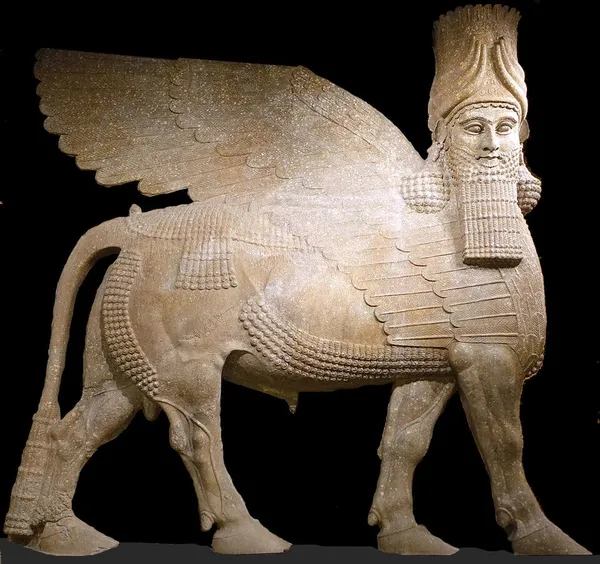
The history of the Assyrians encompasses nearly five millennia, covering the history of the ancient Mesopotamian civilization of Assyria, including its territory, culture and people, as well as the later history of the Assyrian people after the fall of the Neo-Assyrian Empire in 609 BC. For purposes of historiography, ancient Assyrian history is often divided by modern researchers, based on political events and gradual changes in language, into the Early Assyrian (c. 2600–2025 BC), Old Assyrian (c. 2025–1364 BC), Middle Assyrian (c. 1363–912 BC), Neo-Assyrian (911–609 BC) and post-imperial (609 BC–c. AD 240) periods, Sassanid era Asoristan from 240 AD until 637 AD and the post Islamic Conquest period until the present day. Assyria gets its name from the ancient city of Assur, founded c. 2600 BC. During much of its early history, Assur was dominated by foreign states and polities from southern Mesopotamia, for instance falling under the hegemony of the Sumerian city of Kish, being incorporated into the ethnically same Akkadian Empire and falling under the rule of the Third Dynasty of Ur. The city and its surrounds became an independent city-state under its own line of rulers during the collapse of the Third Dynasty of Ur, achieving independence under Puzur-Ashur I c. 2025 BC. Puzur-Ashur's dynasty continued to govern Assur which became a regional power with colonies in Anatolia and influence over South Mesopotamia until the throne was usurped by the Amorite conqueror Shamshi-Adad I c. 1808 BC. This period is sometimes known as the Old Assyrian Empire and latterly the 'Empire of Shamshi Adad'. After a few decades of Babylonian domination in the mid 18th century BC, Assyria was restored as an independent state, perhaps by the king Puzur-Sin or his successor Adasi, both of whom defeated the Babylonians and Amorites. In the 15th century BC, Assyria briefly fell under the suzerainty of the Mitanni kingdom. After wars between Mitanni and the Hittites, Assur broke free, and under Ashur-uballit I (r. c.
Also on this shelf
Glottal stop.
History of the United States Air Force.
See also
- ▸Flag of the Komi Autonomous Soviet Socialist Republic
- ▸Journalists of the Balkan Wars
- ▸Bulgarian language
Text from Wikipedia; plate via Wikimedia Commons. Text CC BY-SA 4.0; plate freely licensed (see Commons). Source record. Images and catalogue data are reproduced from open-access collections.