Writing and Printing
Chữ Nôm
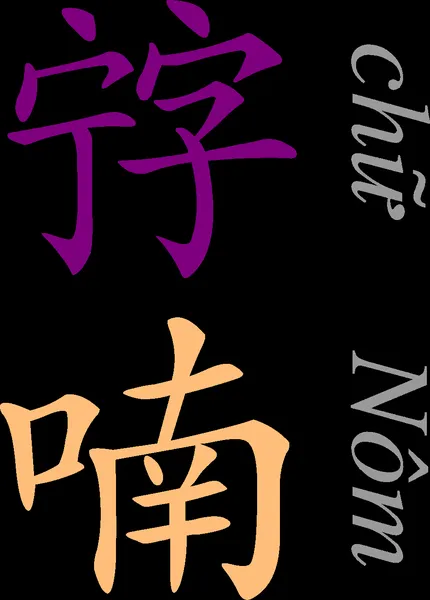
Chữ Nôm (𡨸喃, IPA: [t͡ɕɯ˦ˀ˥ nom˧˧]) is a logographic writing system formerly used to write the Vietnamese language. It uses Chinese characters to represent Sino-Vietnamese vocabulary and some native Vietnamese words, with other words represented by new characters created using a variety of methods, including phono-semantic compounds. This composite script was therefore highly complex and was accessible to the less than five percent of the Vietnamese population who had mastered written Chinese. Although all formal writing in Vietnam was done in Classical Chinese until the early 20th century (except for two brief interludes), between the 15th and 19th centuries some Vietnamese literati used chữ Nôm to create popular works in the vernacular, many in verse. One of the best-known pieces of Vietnamese literature, The Tale of Kiều, was written in chữ Nôm by Nguyễn Du. The Vietnamese alphabet created by Portuguese Jesuit missionaries, with the earliest known usage occurring in the 17th century, replaced chữ Nôm as the preferred way to record Vietnamese literature from the 1920s. While Chinese characters are still used for decorative, historic and ceremonial value, chữ Nôm has fallen out of mainstream use in modern Vietnam. In the 21st century, chữ Nôm is being used in Vietnam for historical and liturgical purposes. The Institute of Hán-Nôm Studies at Hanoi is the main research centre for pre-modern texts from Vietnam, both Chinese-language texts written in Chinese characters (chữ Hán) and Vietnamese-language texts in chữ Nôm.
Also on this shelf
Argentine passport.
Ghani (letter).
See also
- ▸Flag of the Komi Autonomous Soviet Socialist Republic
- ▸Christ Carrying the Cross (Bosch, Ghent)
- ▸Greek ligatures
Text from Wikipedia; plate via Wikimedia Commons. Text CC BY-SA 4.0; plate freely licensed (see Commons). Source record. Images and catalogue data are reproduced from open-access collections.