Writing and Printing
Dissolution of the Soviet Union
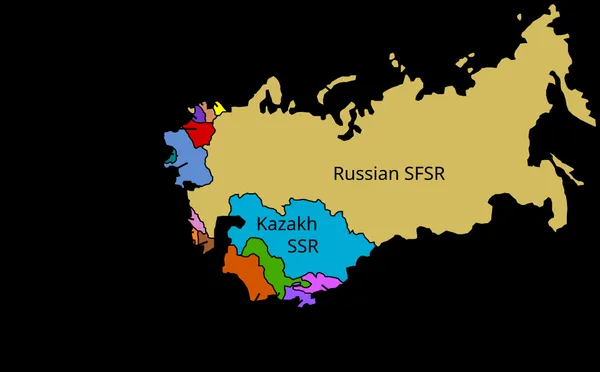
On 26 December 1991, the Soviet Union was formally dissolved and ceased to exist as a sovereign state and subject of international law. It also brought an end to the Soviet Union's federal government and to Soviet leader Mikhail Gorbachev's efforts to reform the Soviet political and economic system in an attempt to stop a period of political and economic stagnation. The collapse of the Soviet Union in 1991 resulted from several factors: chronic economic stagnation, the unsustainable financial burden of the arms race with the United States and foreign conflicts, intense ethnic nationalism and separatism within its union republics, and the destabilizing effects of Gorbachev's reforms (particularly glasnost and perestroika). The process began with growing unrest in the country's union republics developing into an incessant political and legislative conflict between them and the central government. Until its final years, the Soviet Union was made up of 15 union republics that served as the homelands of different ethnic groups. Estonia was the first union republic to declare state sovereignty on 16 November 1988. Lithuania was the first republic to declare independence, in March 1990. During the failed 1991 August coup, communist hardliners attempted to overthrow Gorbachev and reverse his reforms. However, the turmoil caused the central government in Moscow to lose influence, ultimately leading many republics to declare independence in the following days and months. On 8 December 1991, the leaders of its three founding republics—the Russian SFSR, the Byelorussian SSR, and the Ukrainian SSR—signed the Belovezha Accords and declared that the Soviet Union no longer existed. Eight more republics joined the declaration shortly thereafter. The Belovezha Accords also established the Commonwealth of Independent States (CIS) to replace the Soviet Union as a community. Kazakhstan was the last republic to declare independence, on 16 December. All post-Soviet states, with the exception of Georgia and the Baltic states, joined the CIS on 21 December by signing the Alma-Ata Protocol. Russia, as by far the largest and most populous republic, became the Soviet Union's recognized successor state. On 25 December 1991, Gorbachev resigned and transferred his presidential powers—including control of the nuclear launch codes—to Russian president Boris Yeltsin.
Also on this shelf
Caucasian Albanian language.
Ghassanids.
See also
Uncatalogued shelfText from Wikipedia; plate via Wikimedia Commons. Text CC BY-SA 4.0; plate freely licensed (see Commons). Source record. Images and catalogue data are reproduced from open-access collections.