Writing and Printing
History of Austin, Texas
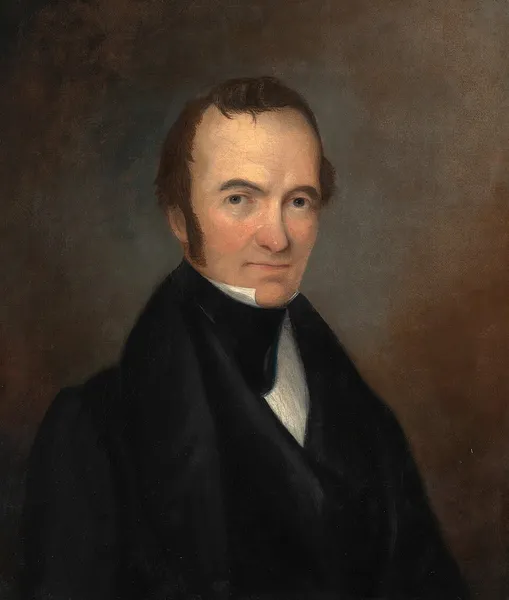
After declaring its independence from Mexico in March, 1836, the Republic of Texas had various changing locations as its seat of government. One stable location was perceived as preferable and so a search for a permanent site for the capital began. In January, 1839, with Mirabeau B. Lamar as its newly elected president, a site selection committee of five commissioners was formed. Edward Burleson had surveyed the planned townsite of Waterloo, near the mouth of Shoal Creek on the Colorado River, in 1838; it was incorporated January 1839. By April of that year the site selection commission had selected Waterloo to be the new capital. A bill previously passed by Congress in May, 1838, specified that any site selected as the new capital would be named Austin, after the late Stephen F. Austin; hence Waterloo upon selection as the capital was renamed Austin. The first lots in Austin went on sale August 1839. Austin's history has also been largely tied to state politics and in the late 19th century, the establishment of the University of Texas made Austin a regional center for higher education, as well as a hub for state government. In the 20th century, Austin's music scene had earned the city the nickname "Live Music Capital of the World." With a population of over 800,000 inhabitants in 2010, Austin is experiencing a population boom. During the 2000s (decade) Austin was the third fastest-growing large city in the nation.
Also on this shelf
Kurmanji.
Gering Courier.
See also
Uncatalogued shelfText from Wikipedia; plate via Wikimedia Commons. Text CC BY-SA 4.0; plate freely licensed (see Commons). Source record. Images and catalogue data are reproduced from open-access collections.