Writing and Printing
Anglo-Saxon runes
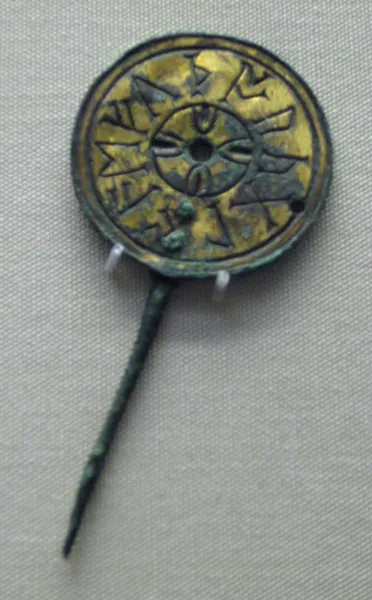
Anglo-Saxon runes or Anglo-Frisian runes are runes that were used by the Anglo-Saxons and Medieval Frisians (collectively called Anglo-Frisians) as an alphabet in their native writing system, recording both Old English and Pre–Old Frisian (Old English: ᚱᚢᚾᚪ, romanized: rūna, lit. 'rune'). Today, the characters are known collectively as the Futhorc ( FOO-thork) from the first six runes and their sound values (ᚠᚢᚦᚩᚱᚳ, fuþorc). The futhorc was a development from the older co-Germanic 24-character runic alphabet, known today as Elder Futhark, expanding to 28 characters in its older form and up to 34 characters in its younger form. In contemporary Scandinavia, the Elder Futhark developed into a shorter 16-character alphabet, today simply called Younger Futhark. Use of the Anglo-Frisian runes is likely to have started in the 5th century onward and they continued to see use into the High Middle Ages. By the 8th century, they were eventually overtaken by the Old English Latin alphabet introduced to Anglo-Saxon England by missionaries at the end of the 6th century. Futhorc runes were no longer in common use by the 11th century, but MS Oxford St John's College 17 indicates that fairly accurate understanding of them persisted into at least the 12th century.
Also on this shelf
Cypriot Arabic.
Bild.
See also
Uncatalogued shelfText from Wikipedia; plate via Wikimedia Commons. Text CC BY-SA 4.0; plate freely licensed (see Commons). Source record. Images and catalogue data are reproduced from open-access collections.