Writing and Printing
History of New York (state)
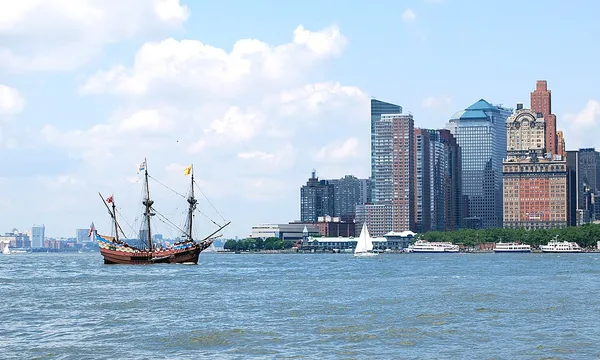
The history of New York begins around 10,000 B.C. when the first people arrived. By 1100 A.D. two main cultures had become dominant as the Iroquoian and Algonquian developed. European discovery of New York was led by Giovanni da Verrazzano in 1524 followed by the first land claim in 1609 by the Dutch. As part of New Netherland, the colony was important in the fur trade and eventually became an agricultural resource thanks to the patroon system. In 1626, the Dutch thought they had bought the island of Manhattan from Native Americans. In 1664, England renamed the colony New York, after the Duke of York and Albany, brother of King Charles II. New York City gained prominence in the 18th century as a major trading port in the Thirteen Colonies. New York played a pivotal role during the American Revolution and subsequent war. The Stamp Act Congress in 1765 brought together representatives from across the Thirteen Colonies to form a unified response to British policies. The Sons of Liberty were active in New York City to challenge British authority. After a major loss at the Battle of Long Island, the Continental Army suffered a series of additional defeats that forced a retreat from the New York City area, leaving the strategic port and harbor to the British army and navy as their North American base of operations for the rest of the war. The Battle of Saratoga was the turning point of the war in favor of the Americans, convincing France to formally ally with them. New York's constitution was adopted in 1777, and strongly influenced the United States Constitution. New York City was the national capital at various times between 1788 and 1790, where the Bill of Rights was drafted. Albany became the permanent state capital in 1797. In 1787, New York became the eleventh state to ratify the United States Constitution. New York hosted significant transportation advancements in the 19th century, including the first steamboat line in 1807, the Erie Canal in 1825, and America's first regularly scheduled rail service in 1831. These advancements led to the expanded settlement of western New York and trade ties to the Midwest settlements around the Great Lakes. Due to New York City's trade ties to the South, there were numerous southern sympathizers in the early days of the American Civil War and the mayor proposed secession.
Also on this shelf
The Dartmouth.
Cypriot Arabic.
See also
Uncatalogued shelfText from Wikipedia; plate via Wikimedia Commons. Text CC BY-SA 4.0; plate freely licensed (see Commons). Source record. Images and catalogue data are reproduced from open-access collections.