Writing and Printing
Harari language
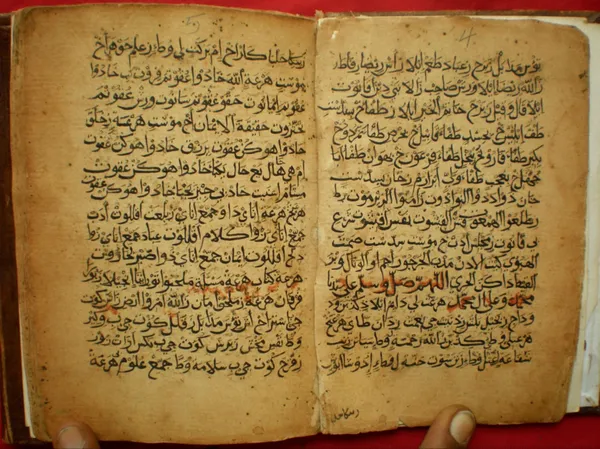
Harari (endonym: ጌይ ሲናን Harari pronunciation: [geː.sɨ.ˈnaːn]) is an Ethio-Semitic language spoken by the Harari people of Ethiopia. Old Harari is a literary language of the city of Harar, a central hub of Islam in the Horn of Africa. According to the 2007 Ethiopian census, it is spoken by 25,810 people. Harari is closely related to the Eastern Gurage languages, Zay, and Siltʼe, all of whom are believed to be linked to the now extinct Semitic Harla language. Locals or natives of Harar refer to their language as Gēy Sinan 'language of the City' (Gēy is the word for how Harari speakers refer to the city of Harar, whose name is an exonym). According to Wolf Leslau, Sidama is the substratum language of Harari and influenced the vocabulary greatly. He identified unique Cushitic loanwords found only in Harari and deduced that it may have Cushitic roots. Harari was originally written with a version of the Arabic script, Harari script, then the Ethiopic script was adopted to write the language. Some Harari speakers in diaspora write their language with the Latin alphabet.
Also on this shelf
Catholic Church in Vietnam.
Jani (letter).
See also
Uncatalogued shelfText from Wikipedia; plate via Wikimedia Commons. Text CC BY-SA 4.0; plate freely licensed (see Commons). Source record. Images and catalogue data are reproduced from open-access collections.