Writing and Printing
History of Omaha, Nebraska
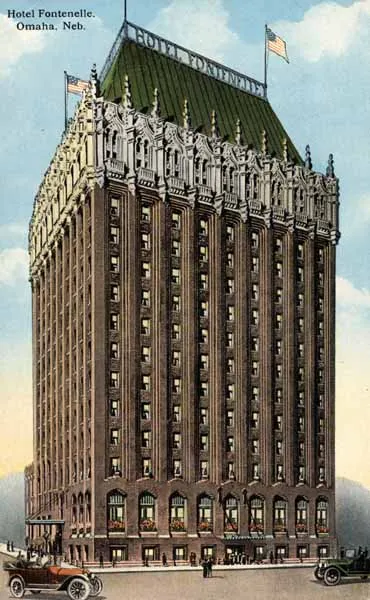
The history of Omaha, Nebraska, began before the settlement of the city, with speculators from neighboring Council Bluffs, Iowa, staking land across the Missouri River illegally as early as the 1840s. When it was legal to claim land in Indian Country, William D. Brown was operating the Lone Tree Ferry to bring settlers from Council Bluffs to Omaha. A treaty with the Omaha Tribe allowed the creation of the Nebraska Territory, and Omaha City was founded on July 4, 1854. With early settlement came claim jumpers and squatters, and the formation of a vigilante law group called the Omaha Claim Club, which was one of many claim clubs across the Midwest. During this period many of the city's founding fathers received lots in Scriptown, which was made possible by the actions of the Omaha Claim Club. The club's violent actions were challenged successfully in a case ultimately decided by the U.S. Supreme Court, Baker v. Morton, which led to the end of the organization. Surrounded by small towns and cities that competed for business from the hinterland's farmers, the city suffered a major setback in the Panic of 1857. Despite this, Omaha quickly emerged as the largest city in Nebraska. After losing the Nebraska State Capitol to Lincoln in 1867, many business leaders rallied and created the Jobbers Canyon in downtown Omaha to outfit farmers in Nebraska, South Dakota, Wyoming and further west. Their entrepreneurial success allowed them to build mansions in Kountze Place and the Old Gold Coast neighborhoods. With the development of the Omaha Stockyards and neighboring packinghouses in the 1870s, several workers' housing areas, including Sheelytown, developed in South Omaha. Its growth happened so quickly that the town was nicknamed the "Magic City". The latter part of the 19th century also saw the formation of several fraternal organizations, including the formation of Knights of Aksarben. City leaders rallied for the creation of the Trans-Mississippi Exposition in 1898. During the Expo, famous madames Anna Wilson and Ada Everleigh were making a good living from the crowds. At the same time, Boss Tom Dennison compounded the city's vices in the notorious Sporting District, with the full support of eight-term mayor "Cowboy" James Dahlman. Many of these early pioneers are buried in Prospect Hill Cemetery.
Also on this shelf
DallasNews Corporation.
ASLwrite.
See also
Uncatalogued shelfText from Wikipedia; plate via Wikimedia Commons. Text CC BY-SA 4.0; plate freely licensed (see Commons). Source record. Images and catalogue data are reproduced from open-access collections.