Writing and Printing
Feuilleton
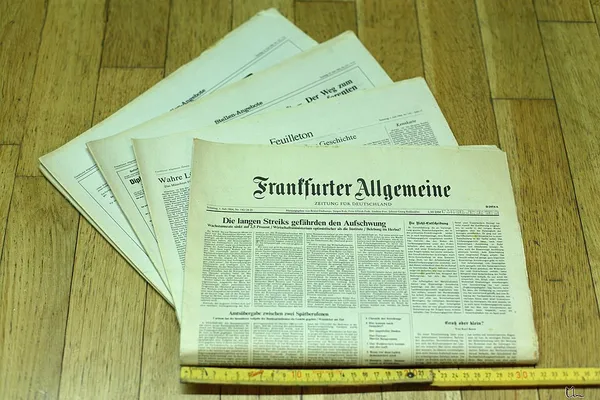
A feuilleton (French pronunciation: [fœjtɔ̃]; a diminutive of French: feuillet, the leaf of a book) was originally a kind of supplement attached to the political portion of French newspapers, consisting chiefly of non-political news and gossip, literature and art criticism, a chronicle of the latest fashions, and epigrams, charades, and other literary trifles. It remains a widely popular newspaper supplement in Germany, Austria, and in German-speaking Switzerland. The term feuilleton was invented in 1800 for the publishing format by the editors of the French Journal des débats, Julien Louis Geoffroy and Bertin the Elder. Early on, the feuilleton was described as a "talk of the town". A contemporary English-language example of the format is the section of The New Yorker that is entitled, "Talk of the Town". However, in English newspapers, the term instead came to refer to an installment of a serial story that is printed in one part of a newspaper.
Also on this shelf
Kodava language.
Athanasius Kircher.
See also
Uncatalogued shelfText from Wikipedia; plate via Wikimedia Commons. Text CC BY-SA 4.0; plate freely licensed (see Commons). Source record. Images and catalogue data are reproduced from open-access collections.