Writing and Printing
History of the Middle East
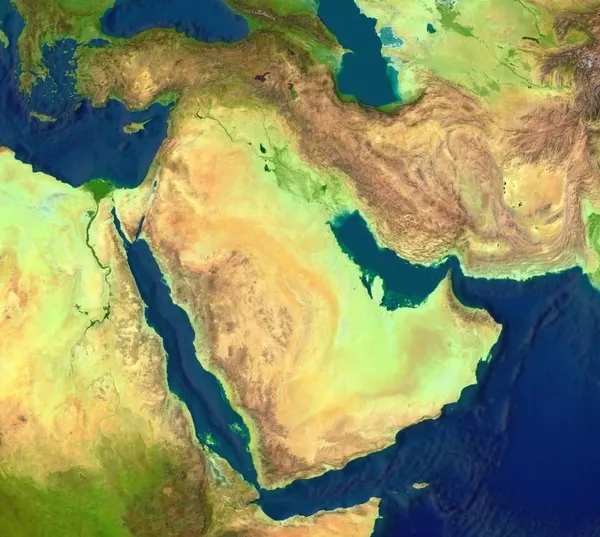
The Middle East, or the Near East, was one of the cradles of civilization: after the Neolithic Revolution and the adoption of agriculture, many of the world's oldest cultures and civilizations were created there. Since ancient times, the Middle East has had several lingua franca: Akkadian, Hebrew, Aramaic, Greek, and Arabic. The Sumerians, around the 5th millennium BC, were among the first to develop a civilization. By 3150 BC, Egyptian civilization unified under its first pharaoh. Mesopotamia hosted powerful empires, notably Assyria which lasted for 1,500 years. For centuries after the 7th century BC, the region was dominated by Persian powers like the Achaemenid Empire. In the 1st century BC, the Roman Republic conquered most of the region, and its successor, the Roman Empire, that ruled from the 6th to 15th centuries AD referred to as the Byzantine Empire, grew significantly more. Roman pagan religions were replaced by Christianity in the 4th century AD. From the 3rd to 7th centuries, Rome ruled alongside the Sasanian Empire. From the 7th century, Islam spread rapidly, expanding Arab identity in the region. The Seljuk dynasty displaced Arab dominance in the 11th century, followed by the Mongol Empire in the 13th century.In the 15th century, the Ottoman Empire invaded most of Anatolia, and dissolved the Byzantine Empire by capturing Constantinople in 1453. The Ottomans and the Safavid dynasty were rivals from the early 16th century. By 1700, the Ottomans were pushed out of Hungary. After the Portuguese colonised Bahrain in 1521, making Bahrain the first Middle Eastern country to be fully colonised by a European power, it opened up pathways for the British Empire to gain control over the Persian Gulf in the 18th and 19th century, whilst the French colonial empire extended into Lebanon and Syria. Regional rulers sought modernization to match European powers. A key moment came with the discovery of oil, first in Persia (1908), then in Bahrain (1932), and other Gulf states later discovering oil, which lead to increased Western interest within the region. In the 1920s to 1940s, Syria and Egypt pursued independence, in 1948 Israel became an independent state. The British, French, and Soviets withdrew from much of the region during and after World War II. In 1947 the United Nations plan to partition Palestine was voted in favor for a Jewish homeland.
Also on this shelf
Azerbaijani alphabet.
Columbus's letter on the first voyage.
See also
Uncatalogued shelfText from Wikipedia; plate via Wikimedia Commons. Text CC BY-SA 4.0; plate freely licensed (see Commons). Source record. Images and catalogue data are reproduced from open-access collections.