Writing and Printing
Ajam
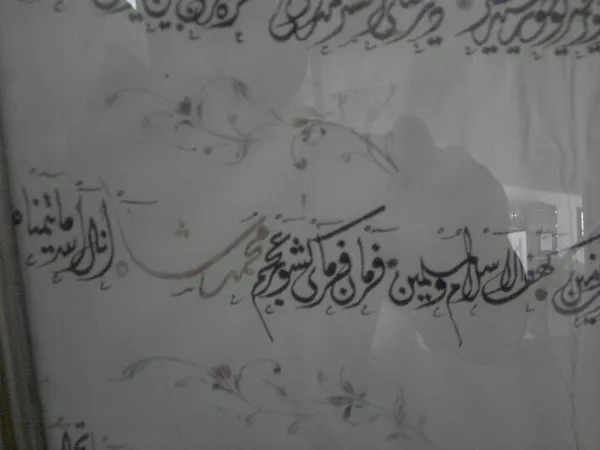
ʿAjam (Arabic: عجم, IPA: [ʕædʒæm], lit. 'mute') is an Arabic word for a non-Arab, especially a Persian. It was historically used as a pejorative—figuratively ascribing muteness to those whose native language is not Arabic—during and after the Muslim conquest of Iran. Since the early Muslim conquests, it has been adopted in various non-Arabic languages, such as Turkish, Azerbaijani, Chechen, Kurdish, Malay, Sindhi, Urdu, Hindi, Bengali, Punjabi, Kashmiri, and Swahili. Today, the terms ʿAjam and ʿAjamī continue to be used to refer to anyone or anything Iranian, particularly in the Arab countries of the Persian Gulf. Communities speaking the Persian language in the Arab world exist among the Iraqis, the Kuwaitis, and the Bahrainis, in addition to others. A number of Arabs with Iranian heritage may have the surname ʿAjamī (عجمي), which has the same meaning as the original word.
Also on this shelf
History of Western typography.
History of Spokane, Washington.
See also
Uncatalogued shelfText from Wikipedia; plate via Wikimedia Commons. Text CC BY-SA 4.0; plate freely licensed (see Commons). Source record. Images and catalogue data are reproduced from open-access collections.