Writing and Printing
History of Michigan
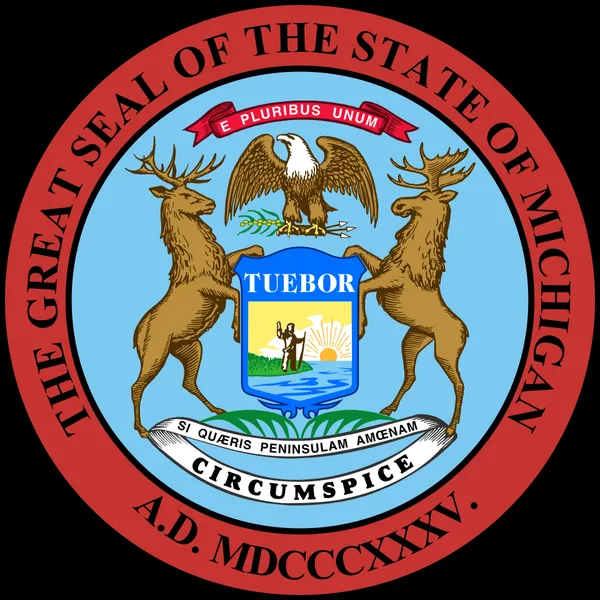
The history of human activity in Michigan, a U.S. state in the Great Lakes, began with settlement of the western Great Lakes region by Paleo-Indians perhaps as early as 11,000 B.C.E. One early technology they developed was the use of native copper, which they would fashion into tools and other implements with hammers. The first Europeans to arrive in Michigan were the French. Explorer Étienne Brûlé traveled through Michigan in 1618 searching for a route to China. Soon the French laid claim to the land and began to trade with the local natives for furs. Men called "voyageurs" would travel the rivers by canoe trading various goods for furs that would bring a high price back in Europe. The first French explorer of Michigan, Étienne Brûlé, began in about 1620. The area was part of French Canada from 1668 to 1763. In 1701, the French officer Antoine de la Mothe Cadillac, along with fifty-one additional French-Canadians, founded a settlement called Fort Pontchartrain du Détroit, now the city of Detroit. When New France was defeated in the French and Indian War, it ceded the region to Britain in 1763. After the British were defeated in the American Revolutionary War, the Treaty of Paris (1783) expanded the United States' boundaries to include nearly all land east of the Mississippi River and south of Canada. Michigan was then part of the "Old Northwest". From 1787 to 1800, it was part of the Northwest Territory. In 1800, the Indiana Territory was created, and most of the current state Michigan lay within it, with only the easternmost parts of the state remaining in the Northwest Territory. In 1802, when Ohio was admitted to the Union, the whole of Michigan was attached to the Territory of Indiana, and so remained until 1805, when the Territory of Michigan was established. The opening of the Erie Canal in 1825 connected the Great Lakes with the Hudson River and New York City, and brought large numbers of people to Michigan and provided an inexpensive way to ship crops to market. In 1835 the people approved the Constitution of 1835, thereby forming a state government, although Congressional recognition was delayed pending resolution of a boundary dispute with Ohio known as the Toledo War. Congress awarded the "Toledo Strip" to Ohio.
Also on this shelf
Dungan alphabets.
History of bras.
See also
Uncatalogued shelfText from Wikipedia; plate via Wikimedia Commons. Text CC BY-SA 4.0; plate freely licensed (see Commons). Source record. Images and catalogue data are reproduced from open-access collections.