Writing and Printing
History of Christianity in Mizoram
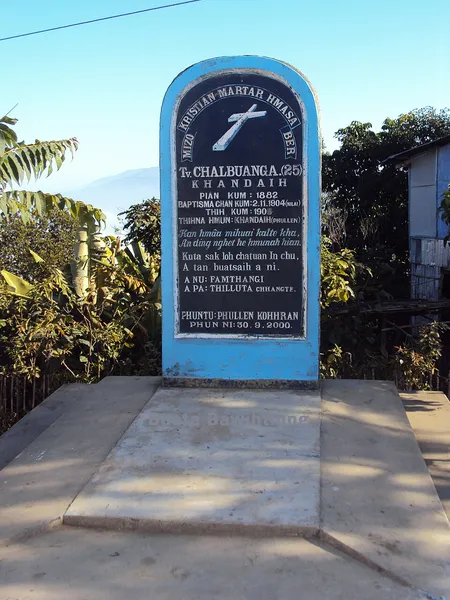
The history of Christianity in Mizoram covers the origin and development of all forms of Christianity in Mizoram since the British occupation at the end of the 19th century until Indian independence. Christianity arrived due to British intervention in tribal warfare and raids on British plantations. The ensuing punitive British military expedition was called the Lushai Expedition of 1871. The subsequent annexation of the erstwhile Lushai Hills to the British Empire opened the gateway for British Christian missions to evangelise the Mizo people. By the 1890s, the British Empire occupied all of Lushai Hills. The natives were still under the influence of several tribal chiefdoms, practising Sakhua (Lushai Animism) and lacking a writing system. There was an urgent need to introduce formal education. The solution came in the form of Christian missionaries. The first Christian Missionary to step into the land of Lushai (Mizoram) was William Williams of the Welsh Mission, in 1891. But, he got little or no time to spread the gospel and then died at a young age due to illness. The pioneers were James Herbert Lorrain (who was given a Mizo name, Pu Buanga) and F.W. Savidge (who was named Sap Upa), sent by the Arthington Aborigines Mission in London, who entered Lushai Hills in 1894, the year recorded in Mizoram as the "advent of the Gospel". The Arthington mission was of Baptist persuasion, and the two missionaries were of the Baptist Church, along with David Evan Jones (Zosaphluia) from the Welsh Mission. The Welsh Calvinistic Methodist Church (later constituted in India as the Presbyterian Church of India) was established by D.E. Jones in the 1890s at Aizawl and later, the Baptist Church (Baptist Church of Mizoram) at Lunglei by Lorrain and Savidge. The first church was of Baptist church established at Sethlun, Lunglei. The first recorded Christian convert was M. Suaka, chieftain of Durtlang, near Aizawl, and the first people baptised were Khuma and Khara of the Presbyterian Church. Other denominations soon arrived, including Catholic, Salvation Army, United Pentecostal Church, Seventh-day Adventists and others. Half a century later, the Mizos, by and large, were converted. A variety of indigenous denominations also emerged. The new religion was immensely effective at overturning the traditional culture. Christianity turned into a new culture and ethnic identity.
Also on this shelf
Freedom of the press.
History (theatrical genre).
See also
Uncatalogued shelfText from Wikipedia; plate via Wikimedia Commons. Text CC BY-SA 4.0; plate freely licensed (see Commons). Source record. Images and catalogue data are reproduced from open-access collections.