Writing and Printing
Hetman of the Zaporizhian Cossacks
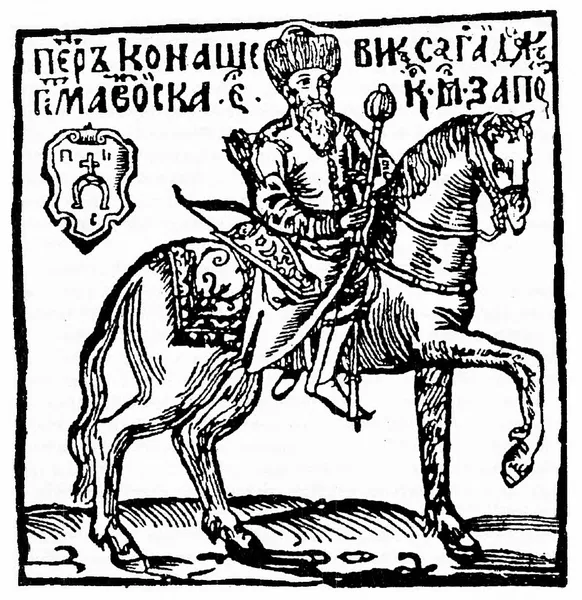
The phrase Hetman of the Zaporizhian Cossacks encompasses various titles and positions of the Cossacks in the history of Ukraine. "Hetman of His Royal Grace's Zaporizhian Host" was the formal title of the hetmans in the military service of the Polish–Lithuanian Commonwealth from 1572 to 1638, selected from the senior officers (starshyna) of the Registered Cossacks (Town Cossacks) in western, central and northern Ukraine; Hetman of the Zaporizhian Host refers to the head of state of the Cossack Hetmanate, the Ukrainian state of 1648–1764; Kish otamans of the Sich Cossacks in southern Ukraine from the 1620s to 1775, which until the late 17th century were also interchangeably called "hetmans"; Hetman of all Ukraine, a title claimed by Pavlo Skoropadsky for a few months in 1918. With the creation of the Registered Cossacks units in 1572, their leading officers were officially referred to as "Senior of His Royal Grace's Zaporozhian Host". The Commonwealth created the Cossack Registry in competition with the formations of the unregistered Zaporizhian Cossacks (colloquially known as the "Zaporizhian Host") living in the Siches of southern Ukraine. According to the Encyclopedia of Ukraine, "The Commonwealth government officially named the registered Cossacks the Zaporozhian Army to underscore the fact that it considered the actual Zaporozhian Host a legal nonentity." For a brief period between the 1625 Treaty of Kurukove and the 1638 Ordinance of the Zaporizhian Host, the Registered Cossacks had the right to elect their own hetman, although he had to be approved by the king. After the 1637–1638 Cossack uprisings were suppressed, the post of hetman was abolished and replaced by a government commissioner. However, the Khmelnytsky Uprising of 1648 saw the combined forces of Registered (Town) and unregistered (Sich) Cossacks elect Bohdan Khmelnytsky as "Hetman of the Zaporizhian Host", without reference to "His Royal Grace"; this would become the title of the head of state of the Cossack Hetmanate ever since.
Also on this shelf
Elymais.
Four Barbarians.
See also
Uncatalogued shelfText from Wikipedia; plate via Wikimedia Commons. Text CC BY-SA 4.0; plate freely licensed (see Commons). Source record. Images and catalogue data are reproduced from open-access collections.