Writing and Printing
Cicero
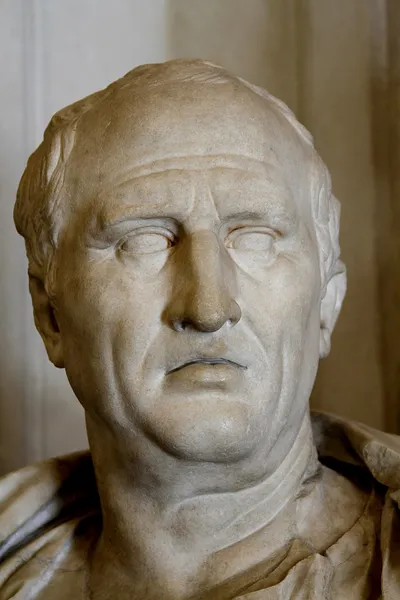
Marcus Tullius Cicero ( SISS-ər-oh, Classical Latin: [ˈmaːrkʊs ˈtʊlli.ʊs ˈkɪkɛroː]; 3 January 106 BC – 7 December 43 BC) was a Roman statesman, lawyer, scholar, philosopher, orator, and writer who tried to uphold optimate principles during the political crises of the Roman Republic that led to the establishment of the Roman Empire. The extensive writings of Cicero include treatises on rhetoric, philosophy, and politics. He is considered one of Rome's greatest orators and prose stylists and the innovator of what became known as "Ciceronian rhetoric". Cicero was educated in Rome and in Greece. He came from a wealthy municipal (municipium) family of the Roman equestrian order, and served as consul in 63 BC. Cicero greatly influenced both ancient and modern reception of the Latin language. A substantial percentage of his work has survived, and he was admired by ancient and modern authors alike. He adapted the arguments of the chief schools of Hellenistic philosophy in Latin and coined a large portion of Latin philosophical vocabulary via lexical innovation (e.g. neologisms such as evidentia, generator, humanitas, infinitio, qualitas, and quantitas), almost 150 of which were the result of translating Greek philosophical terms. Although he was an accomplished orator and successful lawyer, Cicero believed his political career was his most important achievement. During his consulship in 63 BC, he suppressed the Catilinarian conspiracy; however, because he had summarily and controversially executed five of the conspirators without trial, he was exiled in 58 but recalled the next year. Spending much of the 50s unhappy with the state of Roman politics, he took a governorship in Cilicia in 51 and returned to Italy on the eve of Caesar's civil war. Supporting Pompey during the war, Cicero was pardoned after Caesar's victory. After the assassination of Caesar in 44 BC, he led the Roman Senate against Mark Antony, attacking him in a series of speeches (Philippicae). He elevated Caesar's heir Octavian to rally support against Antony in the ensuing violent conflict (War of Mutina); however, after Octavian and Antony reconciled to form the Second Triumvirate (with Lepidus), Cicero was proscribed and executed in late 43 BC while attempting to escape Italy for safety. His severed hands and head were then displayed on the Rostra.
Also on this shelf
Annam (French protectorate).
East Asia.
See also
Uncatalogued shelfText from Wikipedia; plate via Wikimedia Commons. Text CC BY-SA 4.0; plate freely licensed (see Commons). Source record. Images and catalogue data are reproduced from open-access collections.