Writing and Printing
History of the Internet
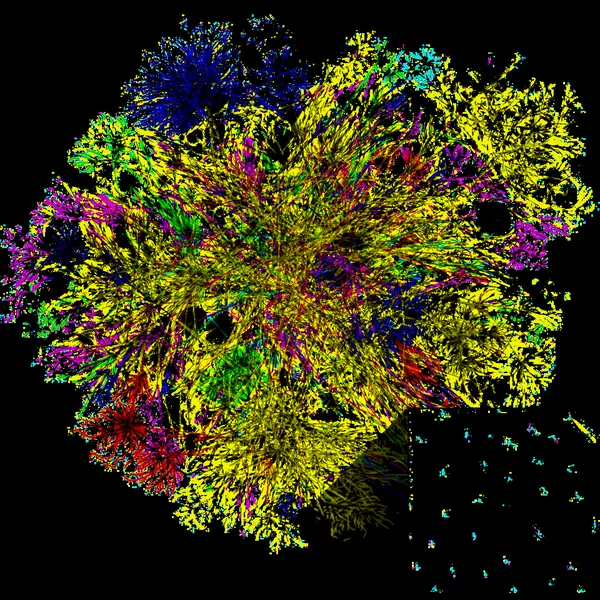
The Internet originated in the efforts of scientists and engineers to build and interconnect computer networks. The Internet Protocol Suite, the set of rules used to communicate between networks and devices on the Internet, arose from research and development in the United States and involved international collaboration, particularly with researchers in the United Kingdom and France. Computer science was an emerging discipline in the late 1950s that began to consider time-sharing between computer users, and later, the possibility of achieving this over wide area networks. J. C. R. Licklider articulated the idea of a universal network at the Information Processing Techniques Office (IPTO) of the United States Department of Defense (DoD) Advanced Research Projects Agency (ARPA). Independently, Paul Baran at the RAND Corporation proposed a distributed network based on data in message blocks in the early 1960s, and Donald Davies conceived of packet switching in 1965 at the National Physical Laboratory (NPL), proposing a national commercial data network in the United Kingdom. ARPA awarded contracts in 1969 for the development of the ARPANET project, directed by Robert Taylor and managed by Lawrence Roberts. ARPANET adopted the packet switching technology proposed by Davies and sought input from Baran. The network of Interface Message Processors (IMPs) was built by a team at Bolt, Beranek, and Newman, with the design and specification led by Bob Kahn. The host-to-host protocol was specified mainly by graduate students, led by Steve Crocker at UCLA, along with Jon Postel and others. The ARPANET expanded rapidly across the United States with connections to the United Kingdom and Norway. Several early packet-switched networks emerged in the 1970s which researched and provided data networking. Louis Pouzin and Hubert Zimmermann pioneered a simplified end-to-end approach to internetworking at the IRIA. Peter Kirstein put internetworking into practice at University College London in 1973. Bob Metcalfe developed the theory and practice behind Ethernet and the PARC Universal Packet. ARPA initiatives and the International Network Working Group developed and refined ideas for internetworking, in which multiple separate networks could be joined into a network of networks.
Also on this shelf
Egmont Group.
Alternate history.
See also
Uncatalogued shelfText from Wikipedia; plate via Wikimedia Commons. Text CC BY-SA 4.0; plate freely licensed (see Commons). Source record. Images and catalogue data are reproduced from open-access collections.