Writing and Printing
Heng (letter)
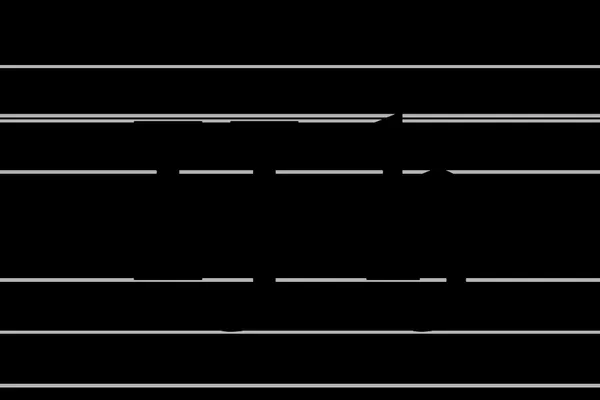
Heng is a letter of the Latin alphabet, originating as a typographic ligature of h and ŋ. It was originally used for a voiceless [j]-like sound in Dania transcription of the Danish language (in Dania, it is considered a ligature of h and j). Heng was used word-finally in early transcriptions of Mayan languages, where it may have represented a uvular fricative. It is sometimes used to write Judeo-Tat. Heng has been occasionally used by phonologists to represent a jocular phoneme in English, which includes both [h] and [ŋ] as its allophones, to illustrate the limited usefulness of minimal pairs to distinguish phonemes. /h/ and /ŋ/ are separate phonemes in English, even though no minimal pair for them exists due to their complementary distribution. Heng is also used in Bantu linguistics to indicate a voiced alveolar lateral fricative [ɮ]. Heng was also historically used in the IPA for this sound, and later a compromise form between the two symbols ⟨⟩ was used.
Also on this shelf
Boro language (India).
Cuneiform.
See also
Uncatalogued shelfText from Wikipedia; plate via Wikimedia Commons. Text CC BY-SA 4.0; plate freely licensed (see Commons). Source record. Images and catalogue data are reproduced from open-access collections.