Writing and Printing
Bosnian language
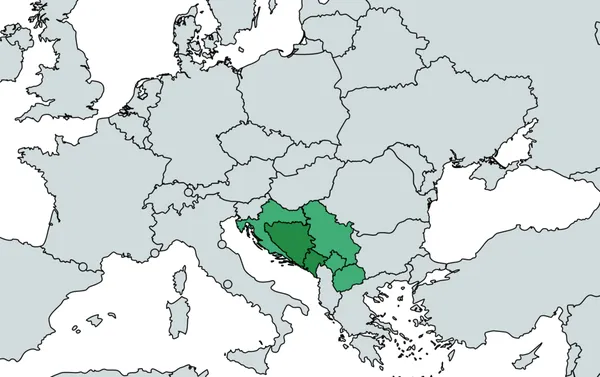
Bosnian is the standard variety of the Serbo-Croatian language mainly used by Bosniaks. It is one of the three official languages of Bosnia and Herzegovina, a co-official language in Montenegro, and an officially recognized minority language in Croatia, Serbia, North Macedonia and Kosovo. Bosnian uses both the Latin and Cyrillic alphabets, with Latin in everyday use. It is notable among the varieties of Serbo-Croatian for a number of Arabic, Persian and Ottoman Turkish loanwords, largely due to the language's interaction with those cultures through Islamic ties. Bosnian is based on the most widespread dialect of Serbo-Croatian, Shtokavian, more specifically on Eastern Herzegovinian, which is also the basis of standard Croatian, Serbian and Montenegrin varieties. Therefore, the Declaration on the Common Language of Croats, Serbs, Bosniaks and Montenegrins was issued in 2017 in Sarajevo. Although the common name for the common language remains 'Serbo-Croatian', newer alternatives such as 'Bosnian-Croatian-Serbian' and 'Bosnian-Croatian-Montenegrin-Serbian' (commonly abbreviated 'BCMS') have been increasingly utilised since the 1990s, especially within diplomatic circles. Informally, the terms naš and naški ('ours / our language') are frequently used to avoid controversies over the naming of these languages.
Also on this shelf
Arthur A. Taylor.
Enochian magic.
See also
Uncatalogued shelfText from Wikipedia; plate via Wikimedia Commons. Text CC BY-SA 4.0; plate freely licensed (see Commons). Source record. Images and catalogue data are reproduced from open-access collections.