Writing and Printing
C with bar
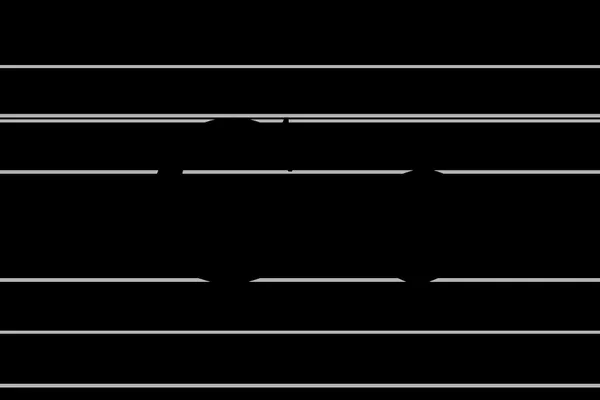
Ꞓ, minuscule: ꞓ, is a modified letter of the Latin script, formed from C with the addition of a bar. It was used in the final version of the Unified Northern Alphabet, approved in 1932 for Saami, Selkup, Khanty, Evenki, Even, Nanai, Udege, Chukchi, Koryak and Nivkh languages to denote the sound [t͡ʃ], although in some of these languages in practice, several other alphabets were used. Also, this letter was used in the Latinized Shugnan alphabet (1931-1939) to denote the sound [t͡s]. The United States Federal Geographic Data Committee uses the capital Ꞓ to represent the Cambrian Period in geologic history. In phonetic transcription, the lowercase ꞓ may denote a voiceless palatal fricative (IPA: [ç]), and in 1963, it was proposed as a symbol for a voiceless flat postalveolar fricative [ɻ̊˔] by William A. Smalley. In 19th-century American English dictionaries such as those by Noah Webster and William Holmes McGuffey, the letter was used to denote ⟨c⟩ pronounced as /k/. In the old-fashioned Rousselot-Gilliéron phonetic notation, at the beginning of the 20th century, letter ꞓ used to represent the English sh-sound and the IPA [ʃ] sound.
Also on this shelf
Kurukh Banna.
Khojki script.
See also
Uncatalogued shelfText from Wikipedia; plate via Wikimedia Commons. Text CC BY-SA 4.0; plate freely licensed (see Commons). Source record. Images and catalogue data are reproduced from open-access collections.