Writing and Printing
History of the United States (1917–1945)
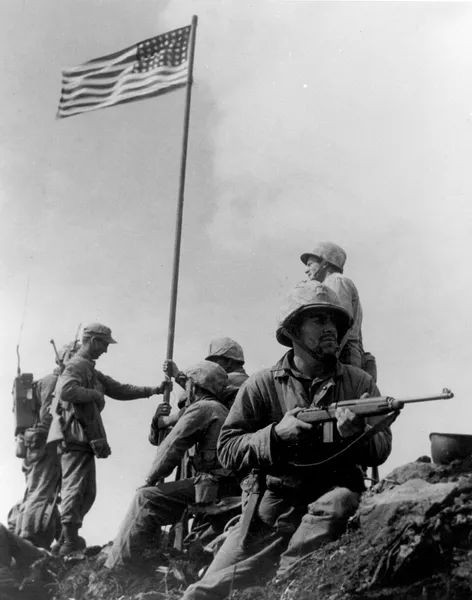
The history of the United States from 1917 to 1945 was marked by World War I, the interwar period, the Great Depression, and World War II. The United States tried and failed to broker a peace settlement for World War I, then entered the war after Germany launched a submarine campaign against U.S. merchant ships that were supplying Germany's enemy countries. The publicly stated goals were to uphold American honor, crush German militarism, and reshape the postwar world. After a slow mobilization, the United States of America helped bring about a decisive victory by supplying badly needed financing, food, and millions of fresh and eager soldiers. After the war, the United States of America rejected the Treaty of Versailles and did not join the League of Nations. In 1920, the manufacture, sale, import and export of alcohol was prohibited by the Eighteenth Amendment to the United States Constitution. Possession of liquor, and drinking it, was never illegal before. The overall level of alcohol consumption did go down, however, state and local governments avoided aggressive enforcement. The federal government was overwhelmed with cases, so that bootlegging and speakeasies flourished in every city. Well-organized criminal gangs exploded in numbers, finances, power, and influence on city politics. A few local domestic-terrorist attacks from radicals, like the 1920 Wall Street Bombing and the 1919 United States anarchist bombings sparked the first Red Scare. Culture wars between fundamentalist Christians and modernists became more intense, as demonstrated by prohibition, the Ku Klux Klan (KKK), and the highly publicized Scopes Trial. The nation enjoyed a period of sustained prosperity in the 1920s. Agriculture went through a bubble in soaring land prices that collapsed in 1921, and that sector remained depressed. Coal mining was shrinking as oil became the main energy source. Otherwise most sectors prospered. Construction flourished as office buildings, factories, paved roads, and new housing was evident everywhere. Automobile production soared, suburban housing expanded and the nation's homes, towns and cities were electrified, along with some farms.
Also on this shelf
Azerbaijani literature.
History of Leeds.
See also
Uncatalogued shelfText from Wikipedia; plate via Wikimedia Commons. Text CC BY-SA 4.0; plate freely licensed (see Commons). Source record. Images and catalogue data are reproduced from open-access collections.