Writing and Printing
Grand Duchy of Lithuania
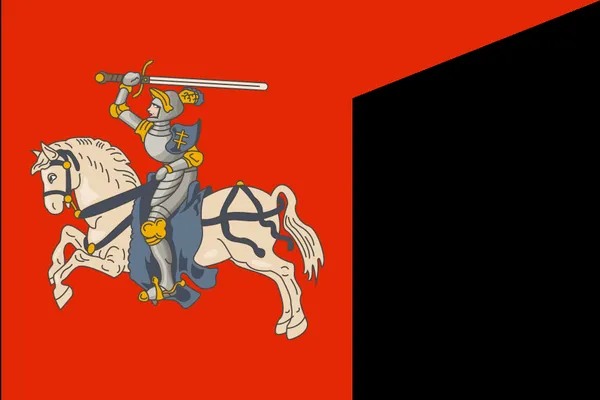
The Grand Duchy of Lithuania was a sovereign state in northeastern Europe that existed from the 13th century, succeeding the Kingdom of Lithuania, to the late 18th century, when the territory was suppressed during the 1795 partitions of Poland–Lithuania. The state was founded by Lithuanians, who were at the time a polytheistic nation of several united Baltic tribes from Aukštaitija. By 1440 the grand duchy had become the largest European state, controlling an area from the Baltic Sea in the north to the Black Sea in the south. The grand duchy expanded to include large portions of the former Kievan Rus' and other neighbouring states, including what is now Lithuania, Belarus, most of Ukraine as well as parts of Latvia, Poland, Moldova and Russia. It was a multi-ethnic and multiconfessional state, with great diversity in languages, religion, and cultural heritage. The consolidation of the Lithuanian lands began in the late 13th century. Mindaugas, the first ruler of the grand duchy, was crowned as the Catholic King of Lithuania in 1253. The pagan state was targeted in a religious crusade by the Teutonic Knights and the Livonian Order, but survived. Its rapid territorial expansion started late in the reign of Gediminas, and continued under the co-leadership of his sons, Algirdas and Kęstutis. Algirdas's son Jogaila signed the Union of Krewo in 1386, bringing two major changes in the history of the Grand Duchy of Lithuania: the conversion to Christianity of Europe's last pagan state, and the establishment of a dynastic union between the Grand Duchy of Lithuania and the Crown of the Kingdom of Poland. This marked the beginning of the rule of other countries by the patrilineal members of the Lithuanian ruling Gediminid dynasty, who since the 14th–15th centuries ruled not only Lithuania, but also Poland, Hungary, Croatia, Bohemia, and Moldavia. The reign of Vytautas the Great, son of Kęstutis, marked both the greatest territorial expansion of the grand duchy and the defeat of the Teutonic Knights in the Battle of Grunwald in 1410. It also marked the rise of the Lithuanian nobility. After Vytautas's death, Lithuania's relationship with the Kingdom of Poland greatly deteriorated. Lithuanian noblemen, including the Radvila family, attempted to break the personal union with Poland.
Also on this shelf
Fuzhou dialect.
Friulian language.
See also
Uncatalogued shelfText from Wikipedia; plate via Wikimedia Commons. Text CC BY-SA 4.0; plate freely licensed (see Commons). Source record. Images and catalogue data are reproduced from open-access collections.