Writing and Printing
Inuktitut syllabics
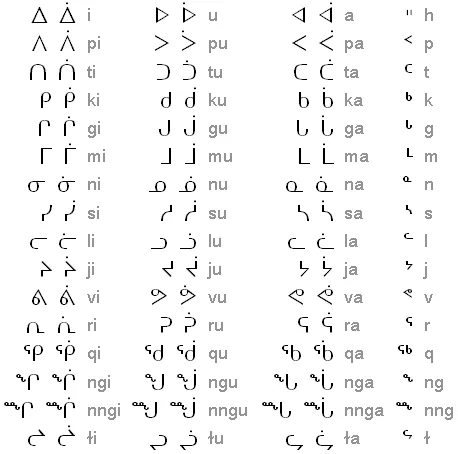
Inuktitut syllabics (Inuktitut: ᖃᓂᐅᔮᖅᐸᐃᑦ, romanized: qaniujaaqpait, or ᑎᑎᕋᐅᓯᖅ ᓄᑖᖅ, titirausiq nutaaq) is an abugida-type writing system used in Canada by the Inuktitut-speaking Inuit of the territory of Nunavut and the Nunavik region of Quebec. In 1976, the Language Commission of the Inuit Cultural Institute made it the co-official script for the Inuit languages, along with the Latin script. The name qaniujaaqpait [qaniujaːqpaˈit] derives from the root qaniq, meaning "mouth". The alternative, Latin-based writing system is named qaliujaaqpait (ᖃᓕᐅᔮᖅᐸᐃᑦ), and it derives from qaliit, a word describing the markings or the grain in rocks. Titirausiq nutaaq [titiʁauˈsiq nuˈtaːq] meaning "new writing system" is to be seen in contrast to titirausiit nutaunngittut (ᑎᑎᕋᐅᓰᑦ ᓄᑕᐅᓐᖏᑦᑐᑦ), the "old syllabics" used before the reforms of 1976. Inuktitut is one variation on Canadian Aboriginal syllabics, and can be digitally encoded using the Unicode standard. The Unicode block for Inuktitut characters is called Unified Canadian Aboriginal Syllabics.
Also on this shelf
Aden.
Dza (letter).
See also
Uncatalogued shelfText from Wikipedia; plate via Wikimedia Commons. Text CC BY-SA 4.0; plate freely licensed (see Commons). Source record. Images and catalogue data are reproduced from open-access collections.