Writing and Printing
Comparison of Japanese and Korean
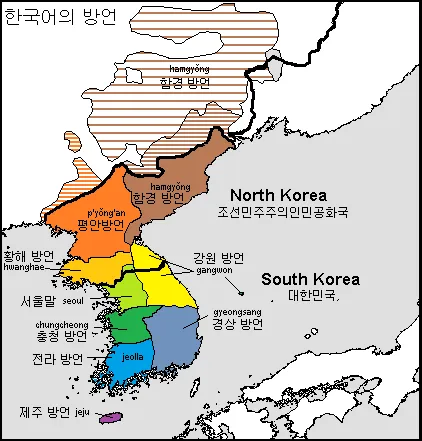
The geographically proximate languages of Japanese (part of the Japonic languages) and Korean (part of the Koreanic languages) share considerable similarity in syntactic and morphological typology while having a small number of lexical resemblances. Observing the said similarities and probable history of Korean influence on Japanese culture, linguists have formulated different theories proposing a genetic relationship between them. These studies either lack conclusive evidence or were subsets of theories that have largely been discredited (like versions of the well-known Altaic hypothesis that mainly attempted to group the Turkic, Mongolian and Tungusic languages together). New research revived the possibility of a genealogical link, such as the Transeurasian hypothesis (a neo-Altaic proposal) by Robbeets et al., supported by computational linguistics and archaeological evidence, but it has many critics. However, there is also more traditional comparative research affirming a genetic link between Japonic and Koreanic, see Classification of the Japonic languages § Japonic-Koreanic theory. Korean and Japanese have very different native scripts (Hangul and kana, respectively), although they both make use of Chinese characters to some extent; Kanji still are a core part of modern Japanese orthography, while Hanja were historically used to write Korean. Today, Hanja are only used in South Korea for limited academic, legal, media, stylistic and disambiguation purposes and are not used at all in North Korea. Although both Hangul and the two modern kana systems (katakana and hiragana) show syllable/mora boundaries, Hangul syllable blocks break down into a featural alphabet, while the kana are essentially pure syllabaries.
Also on this shelf
Bennett Cerf.
Folger Shakespeare Library.
See also
Uncatalogued shelfText from Wikipedia; plate via Wikimedia Commons. Text CC BY-SA 4.0; plate freely licensed (see Commons). Source record. Images and catalogue data are reproduced from open-access collections.