Writing and Printing
Hindi–Urdu controversy
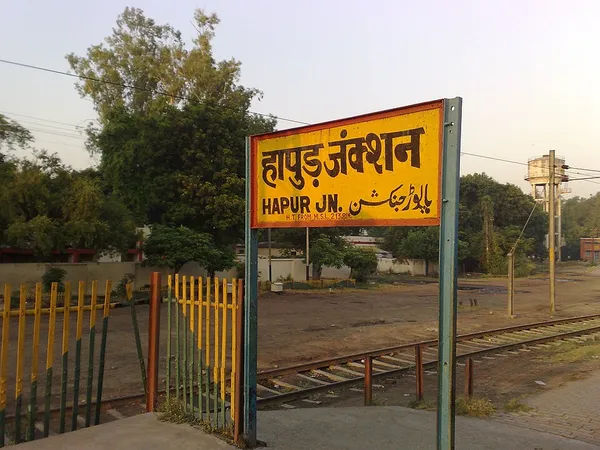
The Hindi–Urdu controversy was a dispute that arose in 19th-century British India over whether Modern Standard Hindi or Standard Urdu should be chosen as a national language. It is considered one of the leading Hindu–Muslim issues of British India. Hindi and Urdu are mutually intelligible standard registers of the Hindustani language (also known as Hindi–Urdu). The respective writing systems used to write the language, however, are different: Hindi is written in the Devanagari variant of the Brahmic scripts whereas Urdu is written using a modified Nastaliq variant of the Arabic script, each of which is completely unintelligible to readers literate only in one or the other. Both Modern Standard Hindi and Urdu are literary forms of the Dehlavi dialect of Hindustani. A Persianised variant of Hindustani began to take shape during the Delhi Sultanate (1206–1526) and Mughal Empire (1526–1858) in South Asia. Known as Deccani in South India, and by names such as Hindi, Hindavi, and Hindustani in North India and elsewhere, it emerged as a lingua franca across much of Northern India and was written in several scripts including Devanagari, Perso-Arabic, Kaithi, and Gurmukhi. Hindustani in its Perso-Arabic script form underwent a standardisation process and further Persianisation during the late Mughal period in the 18th century, and came to be known as Urdu, a name derived from the Turkic word ordu or orda ('army') and is said to have arisen as the "language of the exalted camp/horde" (Zaban-i-Urdu-yi-Mu'alla), or in the local Lashkari Zaban. As a literary language, Urdu took shape in courtly, elite settings. Along with English, it became the official language of northern parts of British India in 1837. Hindi as a standardised literary register of the Delhi dialect arose in the 19th century; the Braj Bhasha was the dominant literary language in the Devanagari script up until and through the nineteenth century. Efforts by Hindi advocates to promote a Devanagari version of the Delhi dialect intensified around 1880. The goal was to incorporate Hindi into administration and education, where Urdu had a linguistic monopoly on official work. In the middle of the 18th century, a movement among Urdu poets advocating the further Persianisation of Hindustani occurred, in which certain native Sanskritic and Prakritic words were supplanted with Persian and Arabic loanwords.
Also on this shelf
Dhanabhuti.
Celtic languages.
See also
Uncatalogued shelfText from Wikipedia; plate via Wikimedia Commons. Text CC BY-SA 4.0; plate freely licensed (see Commons). Source record. Images and catalogue data are reproduced from open-access collections.