Writing and Printing
Flong
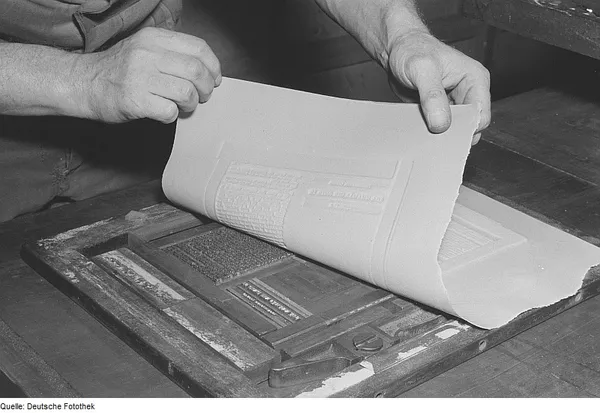
In relief printing, a flong, also called a matrix or mat, is a flat material made of paper and paste or wood pulp and filler that can be formed into a mold by pressing it onto a forme of set type or other relief matter, such as printing blocks. When heated to dry or after pressing, the flong is removed, and the resulting mold is used to cast a flat or curved metal stereotype (or "stereo") that can be used in letterpress printing on either flat-bed or rotary press. After the flong is made, the original type can be distributed (for hand-set composition) or melted down (for hot metal typesetting). The term flong was introduced by 1862 to refer specifically to a paper-based matrix, which was in use no later than the 1850s. The word derives from the French flan, which then referred generically to a cake-like pastry, and was coined by stereotypers who saw a resemblance between the layered paper-and-paste mold material and the food. Flongs were a component of the expansion of newspaper publishing from the mid-19th century onward, enabling the use of high-speed rotary presses that required curved stereotype plates rather than flat formes of individual type. The scale of newspaper production from the mid-19th century through the late 20th century required substantial quantities of flongs, based on the number of newspapers in operation and their page counts: each page of each edition of every newspaper required a separate flong and one or more matching stereotypes. Newspaper flongs were typically discarded after casting, and the resulting stereotype plates were melted down after printing. However, some printers kept them on hand during this era for reprinting: one source claims the United States Government Publishing Office had over a quarter of a million flongs in storage by 1941.
Also on this shelf
Coinage of Capua.
José Gabriel García.
See also
Uncatalogued shelfText from Wikipedia; plate via Wikimedia Commons. Text CC BY-SA 4.0; plate freely licensed (see Commons). Source record. Images and catalogue data are reproduced from open-access collections.