Writing and Printing
Basque language
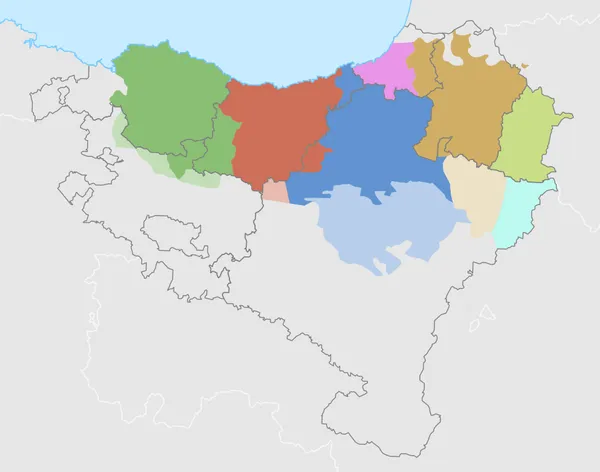
Basque ( BASK, BAHSK; endonym euskara [eus̺ˈkaɾa]) is a language spoken by Basques and other residents of the Basque Country, a region that straddles the westernmost Pyrenees in adjacent parts of southwestern France and northern Spain. Basque is Europe's only known language isolate (with no relation to any other known languages) and the only surviving language of Paleo-European origin. The Basques are indigenous to and primarily inhabit the Basque Country. Basque has 806,000 speakers: 93.7% (756,000) are in the Spanish area of the Basque Country and the remaining 6.3% (51,000) are in the French portion. Native speakers live in a contiguous area that includes parts of four Spanish provinces and the three "ancient provinces" in France. Gipuzkoa, most of Biscay, a few municipalities on the northern border of Álava and the northern area of Navarre formed the core of the remaining Basque-speaking area before measures were introduced in the 1980s to strengthen Basque fluency. By contrast, most of Álava, the westernmost part of Biscay, and central and southern Navarre are predominantly populated by native speakers of Spanish, either because Basque was replaced by either Navarro-Aragonese or Spanish over the centuries (as in most of Álava and central Navarre), or because it may never have been spoken there (as in parts of Enkarterri and south-eastern Navarre). In Francoist Spain, Basque language use was suppressed by the government's repressive policies. In the Basque Country, "Francoist repression was not only political, but also linguistic and cultural." Franco's regime suppressed Basque from official discourse, education, and publishing, making it illegal to register newborn babies under Basque names, and even requiring tombstone engravings in Basque to be removed. In some provinces the public use of Basque was suppressed, with people fined for speaking it. Public use of Basque was frowned upon by supporters of the regime, often regarded as a sign of anti-Francoism or separatism. In the 1960s and later, still under the regime, the trend reversed and education and publishing in Basque began to flourish.
Also on this shelf
Ethiopian art.
D with top bar.
See also
Uncatalogued shelfText from Wikipedia; plate via Wikimedia Commons. Text CC BY-SA 4.0; plate freely licensed (see Commons). Source record. Images and catalogue data are reproduced from open-access collections.