Writing and Printing
History of Palestinian journalism
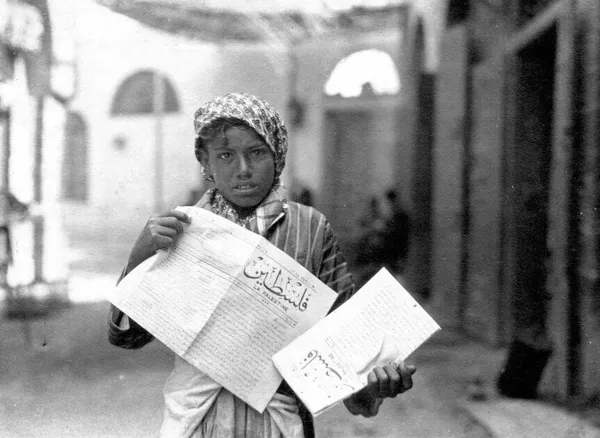
The history of Palestinian journalism dates back to the 19th century, and more newspapers in Palestine began to appear after the lifting of press censorship in the Ottoman Empire in 1908 following the Young Turk Revolution. Newspapers in the region were primarily written in Arabic, Hebrew, and Ottoman Turkish. Arabic-language newspapers voiced Arab aspirations, largely opposing Zionism, whilst the Hebrew newspapers largely supported Zionism. Al-Karmil was established in 1908 and Falastin in 1911, both published by Palestinian Christians, whilst Haaretz, established in 1918, is the longest-running newspaper established by Palestinian Jews. However, the emerging press was soon suppressed after the outbreak of World War I in 1914. When Palestine became a British Mandate in 1920, its press became more diverse, as over 250 Arabic newspapers and 65 in other languages were circulating in Mandatory Palestine by the mid-1930s. The British began to introduce restrictive measures after the 1929 Palestine riots, and suspended many major publications during the 1936–1939 Arab revolt. Following the outbreak of World War II in 1939, the British authorities closed almost all the newspapers, with the exception of Falastin and Al-Difa', whose rivalry marked the mandate period. The 1948 Palestine war forced Falastin and Al-Difa to move from Jaffa to East Jerusalem, which along with Al-Jihad, became Jordan's press for many years. Jordan issued a new press law in early 1967 that forced a merger of newspapers, leaving only East Jerusalem-based Al-Quds. Israel's occupation of the West Bank and the Gaza Strip following the Six Day War in 1967 brought the Palestinian press under Israeli military censorship, which would continue until the establishment of the Palestinian Authority in 1993. The three main newspapers circulating in the Palestinian territories today include Al-Quds; and Ramallah-based Al-Hayat Al-Jadida and Al-Ayyam. Palestinian journalists reporting from the occupied territories have witnessed restrictions and risks, especially during the First and Second Intifadas which started in 1987 and 2000 respectively, and the ongoing Gaza war. The year 2023 saw record numbers of Palestinian journalists arrested and killed by the Israeli military.
Also on this shelf
Harakah (newspaper).
Einsiedeln Abbey.
See also
Uncatalogued shelfText from Wikipedia; plate via Wikimedia Commons. Text CC BY-SA 4.0; plate freely licensed (see Commons). Source record. Images and catalogue data are reproduced from open-access collections.