Writing and Printing
Bosnian Cyrillic
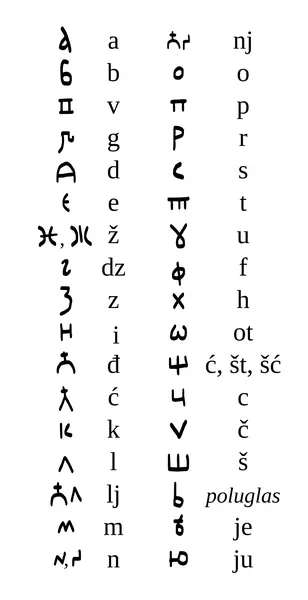
Bosnian Cyrillic, also known as Bosančica, is a variant of the Cyrillic alphabet that originated in medieval region of Bosnia. The term was coined at the end of the 19th century by Ćiro Truhelka. It was widely used in modern-day Bosnia and Herzegovina and the bordering areas of modern-day Croatia (southern and middle Dalmatia and Dubrovnik regions). Its name in Serbo-Croatian is Bosančica and Bosanica the latter of which might be translated as Bosnian script. Some of those who wrote in that script referred to it as the Serbian Script. Neutral scholars call it Western Cyrillic. Serb scholars call it Serbian Script, Serbian Letters, Serbian–Bosnian script, Bosnian–Serb Cyrillic, Serbian Western Cyrillic, Serbian Minuscule, as part of variant of Serbian Cyrillic and deem the term "bosančica" Anti-Serbian Austro-Hungarian propaganda. Croat scholars also call it Croatian script, Croatian–Bosnian script, Bosnian–Croat Cyrillic, harvacko pismo, arvatica. For other names of Bosnian Cyrillic, see below. The use of Bosančica amongst Bosnian Muslims was replaced by Arebica upon the introduction of Islam in Bosnia Eyalet, first amongst the elite, then amongst the wider public. The first book in Bosančica was printed by Frančesko Micalović in 1512 in Venice.
Also on this shelf
History of Frankfurt.
Aleut language.
See also
Uncatalogued shelfText from Wikipedia; plate via Wikimedia Commons. Text CC BY-SA 4.0; plate freely licensed (see Commons). Source record. Images and catalogue data are reproduced from open-access collections.