Writing and Printing
History of Kazakhstan
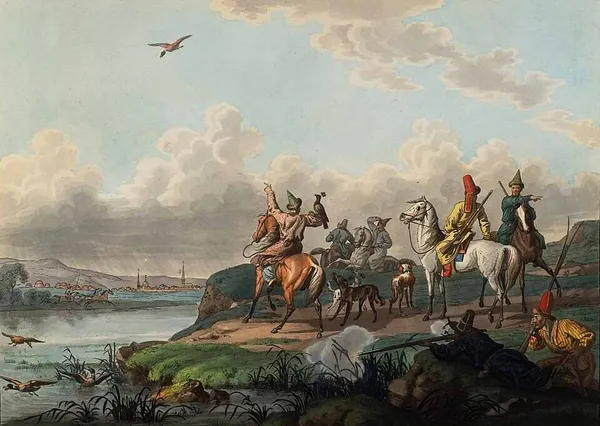
Kazakhstan, the largest country fully within the Eurasian Steppe, has been a historical crossroads and home to numerous different peoples, states and empires throughout history. Throughout history, peoples on the territory of modern Kazakhstan used to have a nomadic lifestyle, which developed and influenced Kazakh culture. Human habitation of the territory of present-day Kazakhstan dates back to the Paleolithic, with Neanderthals and later modern humans inhabiting the region. The Neolithic period saw the development of agriculture, animal husbandry, and the Botai culture, associated with early horse domestication. From the first millennium BC, the region was inhabited by nomadic peoples including the Saka, who spoke Iranian languages. In the 13th century, the region became part of the Mongol Empire and subsequently the Golden Horde. The Kazakhs emerged from the Turkic and Mongol peoples of the Jochid Ulus, and in the 15th century Zhanibek Khan and Kerey Khan established the Kazakh Khanate. By the 16th century, the Kazakh Khanate had become a major nomadic power in the steppe and the last major Chinggisid state in the region. During the 18th and 19th centuries, the Kazakh Khanate fragmented into the three zhuzes and gradually came under Russian control. The khanate institution was formally abolished in 1822, and the final major attempt to restore Kazakh independence, led by Kenesary Qasymov, ended with his death in 1847. Following the Russian Revolution, the Alash Orda government sought Kazakh autonomy, but Kazakhstan was incorporated into the Soviet Union. Soviet collectivization caused a catastrophic famine in the early 1930s, resulting in the deaths of large numbers of Kazakhs and the flight of many others abroad. Kazakhstan became a Soviet republic in 1936 and declared independence on 16 December 1991 following the dissolution of the Soviet Union.
Also on this shelf
John Cage.
Beth Qatraye.
See also
Uncatalogued shelfText from Wikipedia; plate via Wikimedia Commons. Text CC BY-SA 4.0; plate freely licensed (see Commons). Source record. Images and catalogue data are reproduced from open-access collections.