Writing and Printing
Early American publishers and printers
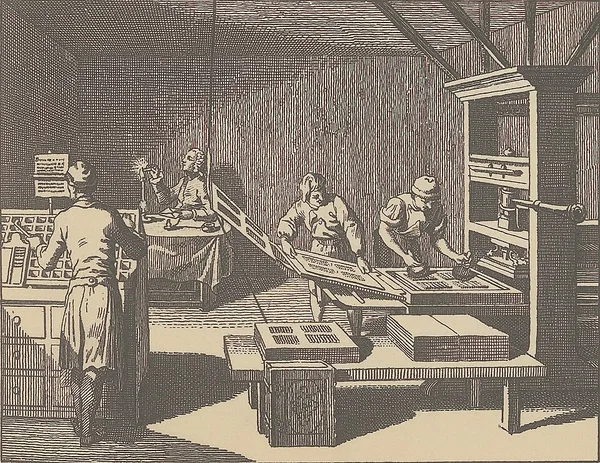
Early American publishers and printers played a central role in the social, religious, political and commercial development of the Thirteen Colonies in British America prior to and during the American Revolution and the ensuing American Revolutionary War that established American independence. The first printing press in the British colonies was established in Cambridge, Massachusetts by owner Elizabeth Glover and printer Stephen Daye. Here, the first colonial broadside, almanack, and book were published. Printing and publishing in the colonies first emerged as a result of religious enthusiasm and over the scarcity and subsequent great demand for bibles and other religious literature. By the mid-18th century, printing took on new proportions with the newspapers that began to emerge, especially in Boston. When the British Crown began imposing new taxes, many of these newspapers became highly critical and outspoken about the British colonial government, which was widely considered unfair among the colonists. In the early years of colonial settlement, communication between the various colonies, which were often hundreds of miles apart, was generally restricted to dispatches, hand-written one at a time, then carried by private carriers to their destinations. Prior to 1700, there were no newspapers in the colonies, so official news came slowly, especially to those who lived away from the colonial seat of government in the major townships or in the remote countryside. Colonial law and news overall was therefore not available in comprehensive print form for the common colonist, whose only knowledge of these things was usually passed on by word of mouth from colonial officials or traveling couriers, or by means of a simple post in a town square. Religious literature was also scarce, and while many colonists possessed bibles, usually brought over from England, they were generally in short supply, while religious literature overall was in great demand among the colonists. As the British Parliament continued imposing additional taxes, especially with the Stamp Act 1765, several colonial newspapers and pamphlets began openly editorializing against British policies and supporting the aims of the American Revolution.
Also on this shelf
Digraph (orthography).
Dudley Leavitt (publisher).
See also
Uncatalogued shelfText from Wikipedia; plate via Wikimedia Commons. Text CC BY-SA 4.0; plate freely licensed (see Commons). Source record. Images and catalogue data are reproduced from open-access collections.