Writing and Printing
History of video games
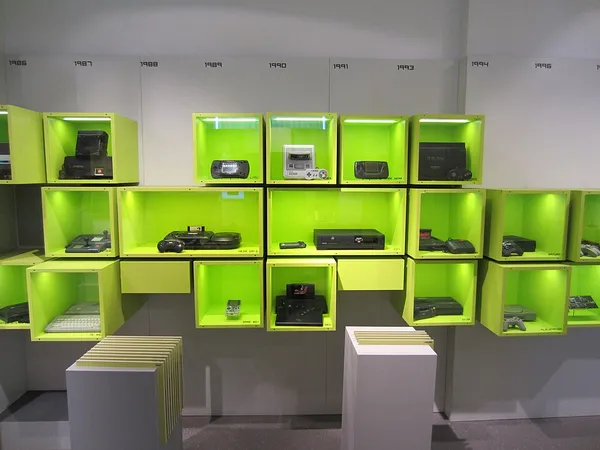
The history of video games began in the 1950s and 1960s as computer scientists began designing simple games and simulations on minicomputers and mainframes. Spacewar! was developed by Massachusetts Institute of Technology (MIT) student hobbyists in 1962 as one of the first such games on a video display. The first consumer video game hardware was released in the early 1970s. The first home video game console was the Magnavox Odyssey, and the first arcade video games were Computer Space and Pong. After its home console conversions, numerous companies sprang up to capture Pong's success in both the arcade and the home by cloning the game, causing a series of boom and bust cycles due to oversaturation and lack of innovation. By the mid-1970s, low-cost programmable microprocessors replaced the discrete transistor–transistor logic circuitry of early hardware, and the first ROM cartridge-based home consoles arrived, including the Atari Video Computer System (VCS). Coupled with rapid growth in the golden age of arcade video games, including Space Invaders and Pac-Man, the home console market also flourished. The 1983 video game crash in the United States was characterized by a flood of too many games, often of poor or cloned qualities, and the sector saw competition from inexpensive personal computers and new types of games being developed for them. The crash prompted Japan's video game industry to take leadership of the market, which had only suffered minor impacts from the crash. Nintendo released its Nintendo Entertainment System in the United States in 1985, helping to rebound the failing video games sector. The latter part of the 1980s and early 1990s included video games driven by improvements and standardization in personal computers and the console war competition between Nintendo and Sega as they fought for market share in the United States. The first major handheld video game consoles appeared in the 1990s, led by Nintendo's Game Boy platform. In the early 1990s, advancements in microprocessor technology gave rise to real-time 3D polygonal graphic rendering in game consoles, as well as in PCs by way of graphics cards. Optical media via CD-ROMs began to be incorporated into personal computers and consoles, including Sony's fledgling PlayStation console line, pushing Sega out of the console hardware market while diminishing Nintendo's role.
Also on this shelf
Fraye Arbeter Shtime.
History of the Jews in Moldova.
See also
Uncatalogued shelfText from Wikipedia; plate via Wikimedia Commons. Text CC BY-SA 4.0; plate freely licensed (see Commons). Source record. Images and catalogue data are reproduced from open-access collections.