Writing and Printing
Jianghuai Mandarin
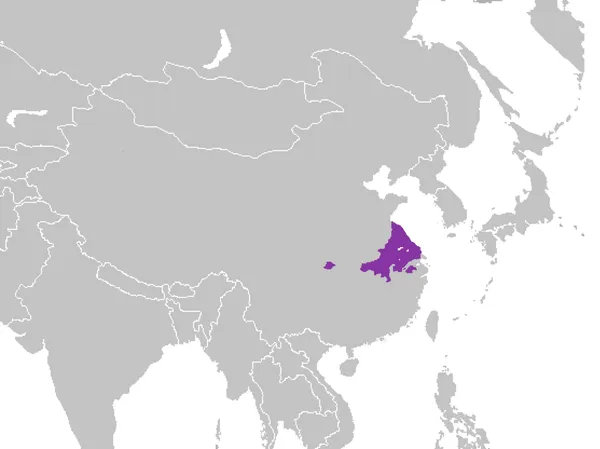
Jianghuai Mandarin (traditional Chinese: 江淮官話; simplified Chinese: 江淮官话; pinyin: Jiānghuái Guānhuà) is one of the most divergent and least mutually-intelligible of the Mandarin language varieties, as it neighbours the Wu, Hui, and Gan groups of Sinitic languages. It is also known as Lower Yangtze Mandarin (traditional Chinese: 下江官話; simplified Chinese: 下江官话; pinyin: Xiàjiāng Guānhuà), named after the Yangtze (Jiang) and Huai Rivers. Lower Yangtze is distinguished from most other Mandarin varieties by the retention of a final glottal stop in words that ended in a stop consonant in Middle Chinese. During the Ming dynasty and early Qing dynasty, the lingua franca of administration was based on Lower Yangtze Mandarin. In the 19th century the base shifted to the Beijing dialect.
Also on this shelf
Greenlandic language.
Etruscan alphabet.
See also
Uncatalogued shelfText from Wikipedia; plate via Wikimedia Commons. Text CC BY-SA 4.0; plate freely licensed (see Commons). Source record. Images and catalogue data are reproduced from open-access collections.