Writing and Printing
History of accounting
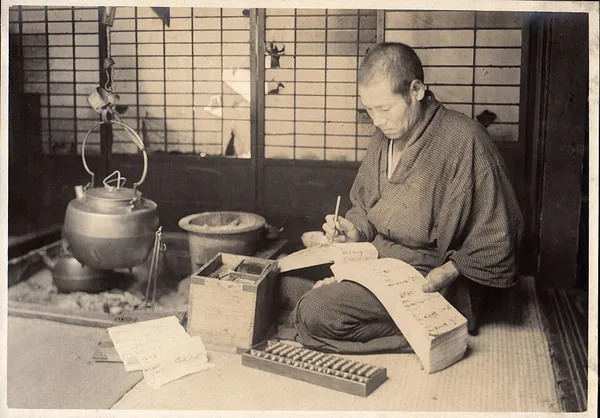
The history of accounting or accountancy can be traced to ancient civilizations. The early development of accounting dates to ancient Mesopotamia, and is closely related to developments in writing, counting and money and early auditing systems by the ancient Egyptians and Babylonians. By the time of the Roman Empire, the government had access to detailed financial information. Double-entry bookkeeping became widespread in Italy in the late 13th century. In 1494, Luca Pacioli, often recognized as the father of accounting and bookkeeping, published his work on double-entry bookkeeping, Summa de arithmetica, spreading the field throughout Italy. The modern profession of the chartered accountant originated in Scotland in the nineteenth century. Accountants often belonged to the same associations as solicitors, who often offered accounting services to their clients. Early modern accounting had similarities to today's forensic accounting. Accounting began to transition into an organized profession in the nineteenth century, with local professional bodies in England merging to form the Institute of Chartered Accountants in England and Wales in 1880.
Also on this shelf
Ink brush.
Francia.
See also
Uncatalogued shelfText from Wikipedia; plate via Wikimedia Commons. Text CC BY-SA 4.0; plate freely licensed (see Commons). Source record. Images and catalogue data are reproduced from open-access collections.