Writing and Printing
Gamelan
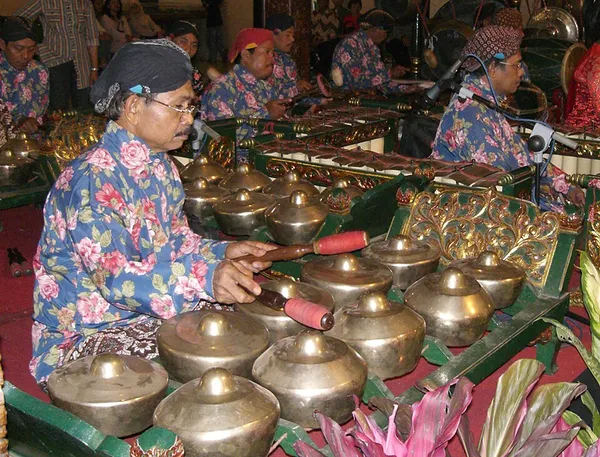
Gamelan (;Javanese: ꦒꦩꦼꦭꦤ꧀, romanized: gamelan (in the ngoko register), ꦒꦁꦱ, gangsa (in the krama register); Balinese: ᬕᬫ᭄ᬩᭂᬮ᭄ᬮᬦ᭄; Sundanese: ᮌᮙᮨᮜᮔ᮪) is the traditional ensemble music of the Javanese, Sundanese, and Balinese peoples of Indonesia, made up predominantly of percussive instruments. The most common instruments used are metallophones (played with mallets) and a set of hand-drums called kendang, which keep the beat. The kemanak, a banana-shaped idiophone, and the gangsa, another metallophone, are also commonly used gamelan instruments on Bali. Other notable instruments include xylophones, bamboo flutes (similar to the Indian bansuri), a bowed string instrument called a rebab (somewhat similar to the gadulka of Bulgaria), and a zither-like instrument called a siter, used in Javanese gamelan. Additionally, vocalists may be featured, being referred to as sindhen for females or gerong for males. Related traditions are also found elsewhere in Maritime Southeast Asia, including Gamelan melayu (Malay Gamelan), a distinct courtly tradition associated with the Johor–Riau cultural sphere that has been documented since at least the eighteenth century and remains practised principally in Malaysia. Although the popularity of gamelan has declined slightly since the introduction of modern popular music to Indonesia, the art form is still widely respected, being commonly played in many traditional ceremonies. It may also be performed as entertainment for some modern events, such as official cultural, corporate, government or educational functions, both formal and informal. Gamelan is also, traditionally, arranged and performed to accompany religious rituals, ceremonies, dance theatre, dance-drama, traditional Indonesian theater, wayang puppets theatre, singing, concerts, festivals, exhibitions, and many more. Many consider gamelan to be an integral part of Indonesian culture. In 2014, Gamelan traditions were recognized as part of the National Intangible Cultural Heritage of Indonesia by the Indonesian Ministry of Education and Culture. On 15 December 2021, Gamelan was inscribed onto the UNESCO Representative List of the Intangible Cultural Heritage of Humanity.
Also on this shelf
Google Nest.
Iranian languages.
See also
Uncatalogued shelfText from Wikipedia; plate via Wikimedia Commons. Text CC BY-SA 4.0; plate freely licensed (see Commons). Source record. Images and catalogue data are reproduced from open-access collections.