Writing and Printing
First Aramaic inscription of Laghman
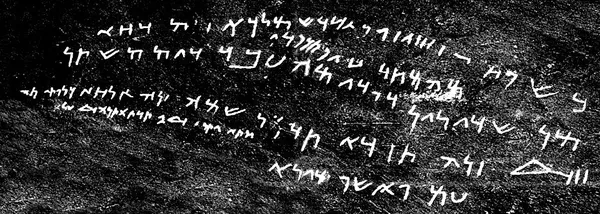
The First Aramaic inscription of Laghman, also called the Laghman I inscription to differentiate from the Laghman II inscription discovered later, is an inscription on a slab of natural rock in the area of Laghmân, Afghanistan, written in Aramaic by the Indian emperor Ashoka about 260 BCE, and often categorized as one of the Minor Rock Edicts of Ashoka. This inscription was published in 1970 by André Dupont-Sommer. Since Aramaic was an official language of the Achaemenid Empire, and reverted to being just its vernacular tongue in 320 BCE with the conquests of Alexander the Great, it seems that this inscription was addressed directly to the populations of this ancient empire still present in this area, or to border populations for whom Aramaic remained the language used in everyday life.
Also on this shelf
Exponentiation.
Ilocano language.
See also
Uncatalogued shelfText from Wikipedia; plate via Wikimedia Commons. Text CC BY-SA 4.0; plate freely licensed (see Commons). Source record. Images and catalogue data are reproduced from open-access collections.