Writing and Printing
Education in Ethiopia
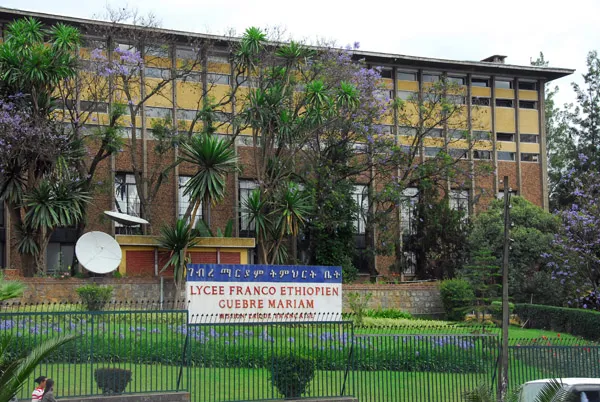
Education in Ethiopia was dominated by the Ethiopian Orthodox Church for many centuries until secular education was adopted in the early 1900s. Prior to 1974, Ethiopia had an estimated literacy rate below 50% and compared poorly with the rest of even Africa in the provision of schools and universities. After the Ethiopian Revolution, emphasis was placed on increasing literacy in rural areas. Practical subjects were stressed, as was the teaching of socialism. By 2015, the literacy rate had increased to 49.1%, still poor compared to most of the rest of Africa. Recently, there has been massive expansion throughout the educational system. Access to primary schools is limited to urban locations, where they are mostly private-sector or faith-based organizations. Formal education consists of in total 12 grades. Primary school education consists of two cycles: grades 1 to 4 and 5 to 8. Secondary schools also have two cycles: grades 9 to 10 and 11 to 12. Primary schools have over 90% of 7-year-olds enrolled although only about half complete both cycles. This situation varies from one region to the other, being lower in agro-pastoral locations (such as Somali and Afar regions) and the growing regions such as Gambela and Benshangul Gumuz. A much smaller proportion of children attend secondary school and even fewer attend its second cycle. School attendance is lowest in rural areas due to lack of provision and the presence of alternative occupations. In later grades the secondary curriculum covers more subjects at a higher level than curricula in most other countries. Low pay and undervaluation of teachers contributes to poor quality teaching, exacerbated by large class sizes and poor resources—resulting in poor performance in national assessments. There is also evidence of corruption including forgery of certificates. Many primary schools have introduced mother-tongue teaching but face difficulties where small minority languages are concerned. Girls' access to education has been improved but early marriage decreases their attendance. Girls' educational attainment is adversely affected by gender stereotypes, violence, lack of sanitary facilities and the consequences of sexual activity. Jimma University is addressing some problems women experience in higher education.
Also on this shelf
Abkhazian Che.
Jutes.
See also
Uncatalogued shelfText from Wikipedia; plate via Wikimedia Commons. Text CC BY-SA 4.0; plate freely licensed (see Commons). Source record. Images and catalogue data are reproduced from open-access collections.