Writing and Printing
History of Denmark
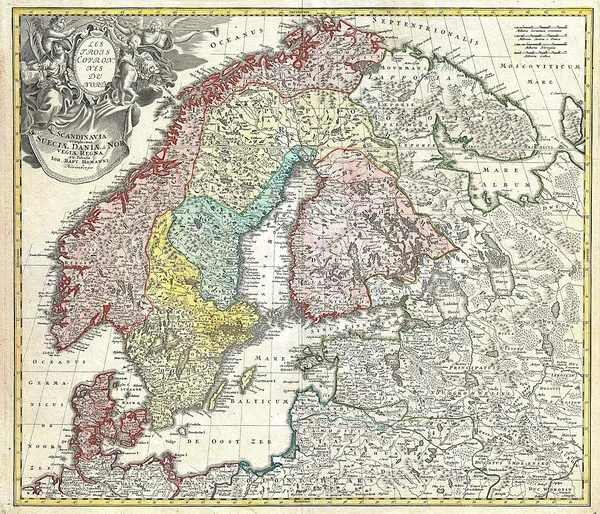
The history of Denmark as a unified kingdom began in the 8th century, but prehistoric cultures populated the area for about 12,000 years, since the end of the last ice age. Historic descriptions of the area and people from around 500 AD include writings by Jordanes and Procopius. The kingdom arose before the Christianization of the Danes c. 960 AD. The Viking kings Gorm the Old and Harald Bluetooth from that time are predecessors of today's king, Frederik X, thus the monarchy of Denmark is the oldest in Europe. Denmark's history was shaped by its location between the North and Baltic seas and between Sweden and Germany. This location provided economic benefits and mutual struggles for control of the Baltic Sea (dominium maris baltici). For example, it had long disputes with Sweden over Skånelandene and with Germany over Schleswig (a Danish fief) and Holstein (a German fief). Eventually, Denmark lost these conflicts and ceded Skåneland to Sweden and later Schleswig-Holstein to the German Empire. After Norway seceded in 1814, Denmark retained control of the old Norwegian colonies of the Faroe Islands, Greenland and Iceland. During the 20th century, Iceland gained independence, Greenland and the Faroes became integral parts of the Kingdom of Denmark and North Schleswig reunited with Denmark in 1920 after a referendum. During World War II, Denmark was occupied by Nazi Germany, but was liberated by British forces of the Allies in 1945 and soon joined the United Nations. With the emergence of the Cold War, Denmark was a founding member of the military alliance NATO in 1949.
Also on this shelf
Akzidenz-Grotesk.
Book of Veles.
See also
Uncatalogued shelfText from Wikipedia; plate via Wikimedia Commons. Text CC BY-SA 4.0; plate freely licensed (see Commons). Source record. Images and catalogue data are reproduced from open-access collections.