Writing and Printing
Dagomba people
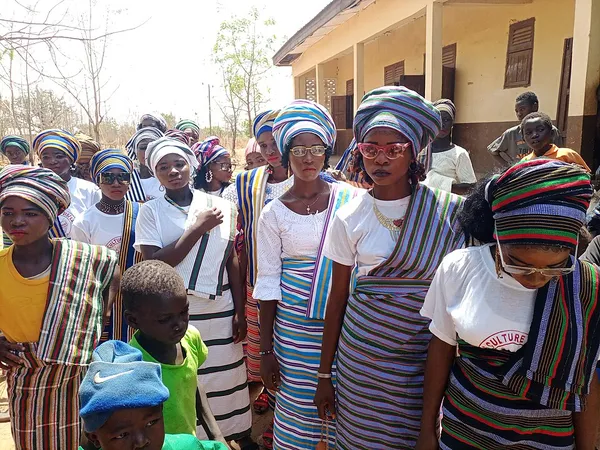
The Dagomba or Dagbamba are an ethnic group of Ghana and Togo. Their population is over 3.1 million. The term Dagbamba originally referred to other related peoples who were unified by Naa Gbewaa, including the Mamprusi and Nanumba. The Dagomba country is called Dagbon and they speak the Dagbani language. Dagbani is a widely spoken language in northern Ghana. Dagbani belongs to the Mabia (Mole-Dagbani) subgroup of the Gur languages, a large group of related languages in West Africa. The Dagomba practice both patrilineal and matrilineal systems of inheritance. In the late 17th century, King Zanjina became the first ruler to practice Islam. During the reign of Zanjina, the region experienced economic growth. Learning centres were established, and scholarship became a part of the local tradition. In 1700, the University Moliyili was established, but it was later abandoned during European colonization. The Dagomba resisted European colonization even after Germany burnt down and occupied its capital, Yendi, located in Eastern Dagbon (Naya). The Dagomba are historically related to the Mossi people of Burkina Faso, and the two groups formed prominent West African medieval empires. The Dagomba are known for their sophisticated oral tradition, hierarchical chieftaincy system, and being one of the few African ethnic groups to reserve royal titles and land ownership for female chiefs. The Dagomba are one of the few African ethnic groups who reserve royal titles for women. Dagomba women rule, ascend to royal positions with male subjects and own regal lands. Notable Dagomba women include Ghana's first female minister, and Africa's first female cabinet minister. Historically, Yennenga is regarded in oral tradition as the founder of the Mossi kingdoms, a people who constitute nearly half of the nation of Burkina Faso. The Gundo Naa is the head of all female chiefs, and the Zosimli Naa enhances collaboration between cities of Dagbon and sister cities.
Also on this shelf
Catherine the Great.
Anton Koberger.
See also
Uncatalogued shelfText from Wikipedia; plate via Wikimedia Commons. Text CC BY-SA 4.0; plate freely licensed (see Commons). Source record. Images and catalogue data are reproduced from open-access collections.