Writing and Printing
Judeo-Arabic
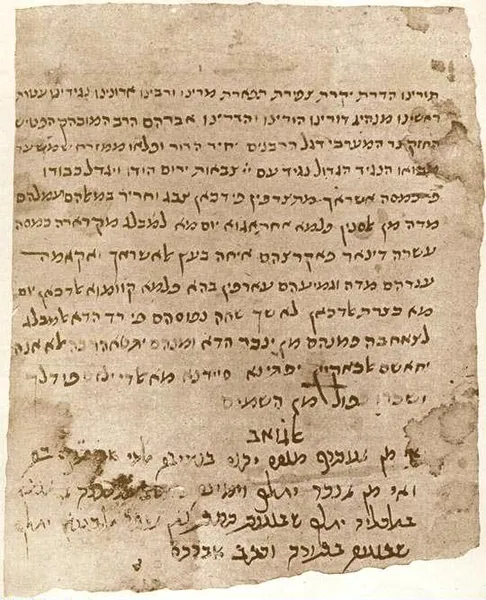
Judeo-Arabic (Judeo-Arabic: ערביה יהודיה, romanized: 'Arabiya Yahūdiya; Arabic: عربية يهودية, romanized: ʿArabiya Yahūdiya ; Hebrew: ערבית יהודית, romanized: 'Aravít Yehudít ), sometimes referred to as Sharh in its high-level translation calque, is a group of related ethnolects or religiolects within the branches of the Arabic language used by Jewish communities. Judeo-Arabic is a mixed form of Arabic, in its formal and vernacular varieties, as it has been used by Jews, and refers to both written forms and spoken dialects. Although Jewish dialectical forms of Arabic, which predate Islam, have been distinct from those of other religious communities, they are not a uniform linguistic entity. Varieties of Arabic formerly spoken by Jews throughout the Arab world have been, in modern times, classified as distinct ethnolects. Under the ISO 639 international standard for language codes, Judeo-Arabic is classified as a macrolanguage under the code jrb, encompassing four languages: Judeo-Moroccan Arabic (aju), Judeo-Yemeni Arabic (jye), Judeo-Egyptian Arabic (yhd), and Judeo-Tripolitanian Arabic (yud). Judeo-Arabic is a blend of Arabic, Arabic dialects, Hebrew, and Aramaic. Later forms of Judeo-Arabic particularly express Hebrew and Aramaic elements. Many significant Jewish works, including a number of religious writings by Saadia Gaon, Maimonides and Judah Halevi, were originally written in Judeo-Arabic, as this was the primary vernacular language of their authors.
Also on this shelf
Junagadh rock inscription of Rudradaman.
Charles F. Harris.
See also
Uncatalogued shelfText from Wikipedia; plate via Wikimedia Commons. Text CC BY-SA 4.0; plate freely licensed (see Commons). Source record. Images and catalogue data are reproduced from open-access collections.