Writing and Printing
History of aviation
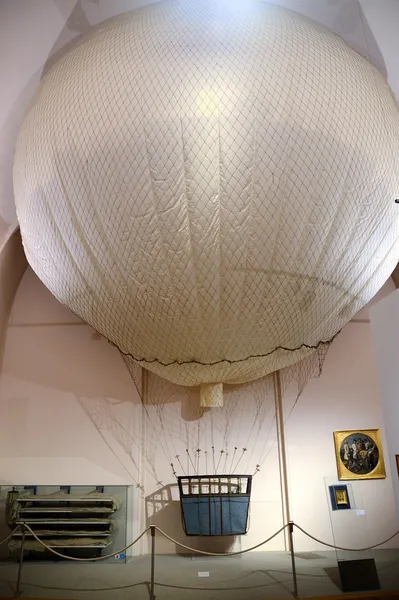
The history of aviation spans over two millennia, from the earliest innovations like kites and attempts at tower jumping to supersonic and hypersonic flight in powered, heavier-than-air jet aircraft. Kite flying in China, dating back several hundred years BC, is considered the earliest example of man-made flight. In the 15th-century Leonardo da Vinci designed several flying machines incorporating aeronautical concepts, but they were unworkable due to the limitations of contemporary knowledge. In the late 18th century, the Montgolfier brothers invented the hot-air balloon which soon led to piloted flights. At almost the same time, the discovery of hydrogen gas led to the invention of the hydrogen balloon. Various theories in mechanics by physicists during the same period, such as fluid dynamics and Newton's laws of motion, led to the development of modern aerodynamics; most notably by Sir George Cayley. Balloons, both free-flying and tethered, began to be used for military purposes from the end of the 18th century, with France establishing balloon companies during the French Revolution. In the 19th century, especially the second half, experiments with gliders provided the basis for learning the dynamics of winged aircraft; most notably by Cayley, Otto Lilienthal, and Octave Chanute. By the early 20th century, advances in engine technology and aerodynamics made controlled, powered, piloted heavier-than-air flight possible for the first time. In 1903, following their pioneering research and experiments with wing design and aircraft control, the Wright brothers successfully incorporated all of the required elements to create and fly the first aeroplane. The basic configuration with its characteristic cruciform tail was established by 1909, followed by rapid design and performance improvements aided by the development of more powerful engines. The first vessels of the air were the rigid steerable balloons pioneered by Ferdinand von Zeppelin that became synonymous with airships and dominated long-distance flight until the 1930s, when large flying boats became popular for trans-oceanic routes.
Also on this shelf
Culture of Somalia.
Henry Doorly.
See also
Uncatalogued shelfText from Wikipedia; plate via Wikimedia Commons. Text CC BY-SA 4.0; plate freely licensed (see Commons). Source record. Images and catalogue data are reproduced from open-access collections.