Textiles and Dress
Indigenous women in the conquest of Paraguay
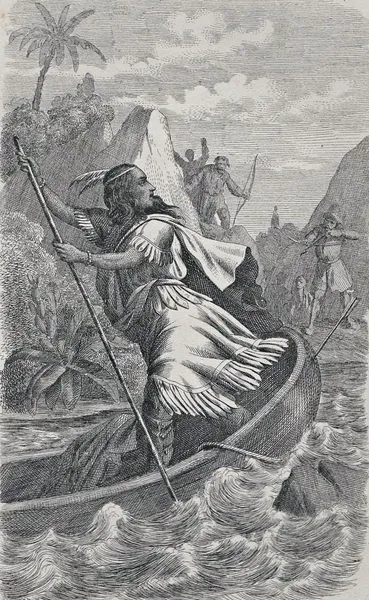
The role of indigenous women in the conquest of Paraguay was central, as the insertion of the Spanish conquistadors into the native societies of the Río de la Plata basin was based on the relationships established with them. In these matrilineal societies, women were the most prized asset of the entire community both as agricultural producers and reproducers of the labor force; through the cuñadazgo—a Guaraní institution by which caciques sealed alliances by giving women to newcomers, transforming them into brothers-in-law or sons-in-law—the first bond between the Guaraní and the Spaniards was structured. The chronicler Ulrich Schmidl described how the Cario people (a Guaraní subgroup) of the settlement of Lambaré gave six women to Captain Juan de Ayolas—the eldest eighteen years old—and two to each soldier of his troop as a sign of peace, so that they would "take care of us, cook, wash and attend to other things". The abandonment of Buenos Aires (which would not be refounded until 1580) and the concentration of the Spanish colonization in Asunción from 1541 onwards marked a turning point: growing demand overwhelmed the cuñadazgo and gave way to the rancheadas, mass and violent deportations of Guaraní women that transformed them into objects of buying and selling, common currency in commercial transactions and merchandise exported to the Portuguese port of São Vicente. The licentious life between colonists and indigenous women was such that the famous nickname "paradise of Muhammad" (Spanish: Paraíso de Mahoma)—in reference to polygamy in Islam—arose to describe the city, coined in a 1545 letter of denunciation by the priest Francisco González de Paniagua and since then turned into an enduring literary trope. An emblematic case of resistance was that of India Juliana, a Cario woman who between 1539 and 1542 poisoned her Spanish master and was executed by order of Álvar Núñez Cabeza de Vaca, and who is today championed by Paraguayan feminism. The mestizaje that emerged from these unions plays a central role in the traditional historiography of Paraguay, which locates in it the origins of the nation and presents it as a harmonious and consensual process. However, modern scholars argue that the process fundamentally involved a relationship of sexual exploitation and economic exploitation, rather than reciprocal exchange.
Also on this shelf
Alamat (band).
Historic Core, Los Angeles.
See also
Uncatalogued shelfText from Wikipedia; plate via Wikimedia Commons. Text CC BY-SA 4.0; plate freely licensed (see Commons). Source record. Images and catalogue data are reproduced from open-access collections.