Textiles and Dress
Charles-François Richard
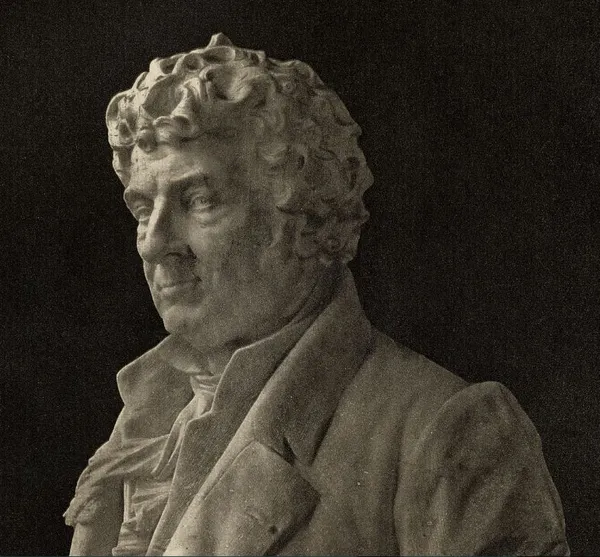
Charles-François Richard, also known as Richard-Chambovet (born 9 August 1772 in Bourg-Argental, Forez province; died 15 April 1851 in Saint-Chamond, Loire department), was a French silk industrialist, and more notably the initiator of the lace industry. After a brief military interlude - due to the revolutionary turmoil - his beginnings as a miller were modest. He then established himself as a passementier specializing in the manufacture of padous, the ribbons needed for culottes and catogans. But ruined for the first time by the general economic slump, fashion later abandoned them for good, putting an end to the business. Looking for a new direction, Richard went to the brand-new Musée des Arts et Métiers, where he met Joseph de Montgolfier. There, he found a rudimentary braiding loom that produced round-section elements - until then, weaving looms had only been able to produce flat elements - and from then on, he worked tirelessly to improve it. Thus, this pioneer paved the way for the industrial manufacture of laces. On the one hand, he innovated by developing these looms, and on the other, he added a steam engine as a driving force. Later, he remained a pioneer, installing a central-heating boiler in his workshops, which increased profitability and enabled more meticulous work. Finally, he equipped his workshops with gas lighting to boost productivity. As part of the nascent industrial revolution, Charles-François Richard was at the origin of an industry that dominated Europe and was recognized as far afield as America. The production of laces was of prime importance at this time: they were very widespread haberdashery items, used for a variety of fastenings. As a result, the town of Saint-Chamond, where Richard settled, became a major player in this field.
Also on this shelf
Ezhava.
Fortaleza.
See also
Uncatalogued shelfText from Wikipedia; plate via Wikimedia Commons. Text CC BY-SA 4.0; plate freely licensed (see Commons). Source record. Images and catalogue data are reproduced from open-access collections.