Textiles and Dress
Broadcloth
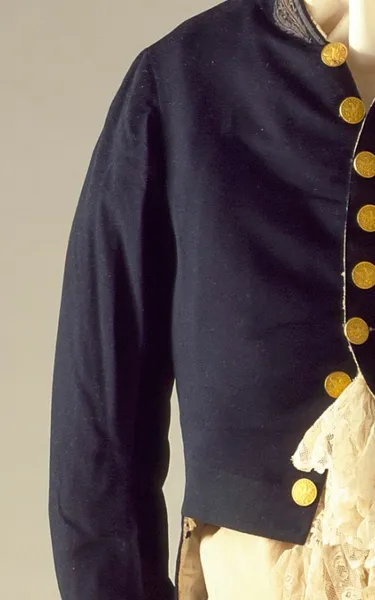
Broadcloth is a dense, plain woven cloth, historically made of wool. The defining characteristic of broadcloth is not its finished width but the fact that it was woven much wider (typically 50 to 75% wider than its finished width) and then heavily milled (traditionally the cloth was worked by heavy wooden trip hammers in hot soapy water) in order to shrink it to the required width. The milling process draws the yarns much closer together than could be achieved in the loom and allows the individual fibres of the wool to bind together in a felting process, which results in a dense, blind-face cloth with a stiff drape: highly weather-resistant, hard-wearing and capable of taking a cut edge without the need for being hemmed. The manufacturing process originated from Flanders; the type of cloth was also made in Leiden and in several parts of England at the end of the medieval period. The raw material was short staple wool, carded and spun into yarn and then woven on a broad loom to produce cloth 1.75 yards wide. After fulling, usually in a fulling mill, the fibres of the resultant cloth would felt together, resulting in a smooth surface.
Also on this shelf
Armenian dress.
Heavenly Bodies: Fashion and the Catholic Imagination.
See also
Uncatalogued shelfText from Wikipedia; plate via Wikimedia Commons. Text CC BY-SA 4.0; plate freely licensed (see Commons). Source record. Images and catalogue data are reproduced from open-access collections.