Textiles and Dress
Border tartan
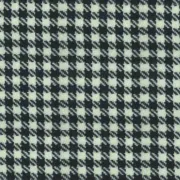
Border tartan, sometimes known as Borders tartan, Northumbrian tartan, Northumberland tartan, shepherds' plaid, shepherds' check, Border drab, or Border check, is a design used in woven fabrics historically associated with the Anglo-Scottish Border, particularly with the Scottish Borders and Northumberland. Possibly the most identifiable Border tartan garment of the region is the maud, made popular from the 1820s by fashionable Border Scots such as Sir Walter Scott, James Hogg, Henry Scott Riddell and Robert Burns. The modern Border tartan is a crossweave of small dark and light checks, much plainer than the more elaborate Scottish tartans. Traditionally, the yarn for the light squares was simply untreated sheep's wool and the darker yarn was the same wool dyed with simple vegetable dyes, such as alder bark or water flag, or the untreated wool of a black sheep. Modern Border Tartans are almost invariably a bold black and white check, but historically the light squares were the yellowish colour of untreated wool, with the dark squares any of a range of dark greys, blues, greens or browns; hence the alternative name of "Border drab". At a distance the checks blend together making the fabric ideal camouflage for stalking game. This style of tartan is one of the oldest in existence as fragments of similar tartans have been found in Great Britain and Jutland. One similar fragment was discovered in an earthenware pot filled with silver coins, at the Antonine Wall in Falkirk, Scotland. This fragment, known as the Falkirk tartan or Falkirk sett, is currently the earliest check fragment found in the British Isles and dates back to Roman Britain times (around the 3rd century AD). It is actually more a tweed than a tartan in weaving style. It is now kept in the National Museum of Scotland. The Celts were said by Roman scholars to wear bright stripes, which some have suggested are actually descriptions of the brighter variants of tartan. Another similar tartan was found on a cloak in the peat bog at Thorsberg, in the modern-day Schleswig-Holstein region of northern Germany.
Also on this shelf
"Weird Al" Yankovic.
Art Nouveau.
See also
Uncatalogued shelfText from Wikipedia; plate via Wikimedia Commons. Text CC BY-SA 4.0; plate freely licensed (see Commons). Source record. Images and catalogue data are reproduced from open-access collections.