Textiles and Dress
Assyrians
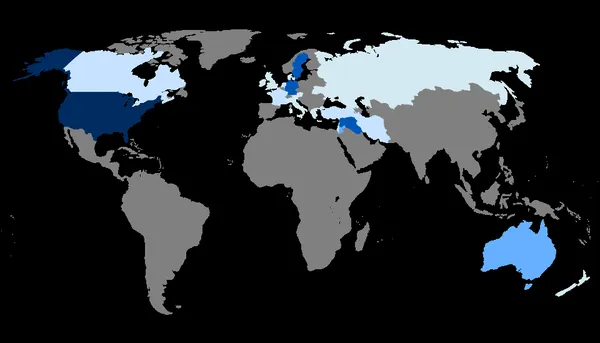
Assyrians (Syriac: ܣܘܪ̈ܝܐ, romanized: Sūrāyē / Sūrōyē) are a distinct ethnic group native to Mesopotamia with roots in ancient Assyria. They speak varieties of Neo-Aramaic, a branch of the Semitic language family, and largely adhere to Syriac Christianity. The Assyrian homeland lies in northern Mesopotamia, encompassing areas along the Zab rivers and spanning parts of modern Turkey, Iran, Iraq, and Syria. Over the past two centuries, large-scale displacement has led to a diaspora across North America, Europe, Australia, the Middle East, and the Caucasus, fueled by genocide, persecution, and regional conflicts. In the United States, Assyrians have preserved and adapted their cultural identity, with notable communities in the Midwest and California. Some members of the community identify alternatively as Chaldeans or Arameans, based on religious, regional, and historic traditions. Assyrians have a continuous cultural and linguistic presence spanning over three millennia. Originally speaking Akkadian, they adopted Aramaic which became a regional lingua franca spoken by Jesus of Nazareth that influenced Hebrew and Arabic. Today, they speak modern Neo-Aramaic dialects with Akkadian roots (primarily Suret and Turoyo) and primarily practice Syriac Christianity across two rites. These include the Chaldean Catholic Church, Assyrian Church of the East, and the Ancient Church of the East in the East Syriac Rite, and the Syriac Catholic and Syriac Orthodox churches in the West Syriac Rite. Aramaic remains one of the oldest continuously used languages in West Asia. The Assyrians were among the first peoples to accept Christianity in the 1st century AD. They are traditionally held to have been evangelised by St. Thomas the Apostle, one of the Twelve Disciples of Jesus Christ, and the disciples St. Addai and St. Mari. By establishing the Church of the East and the distinct East Syriac Rite, they played a central role in spreading Christianity across Asia. Assyrians are broadly distinguished into three principal ecclesiastical traditions, divided by liturgy, dialect, theology, and historical development. Despite long historical and demographic continuity in Mesopotamia, they remain the only indigenous Middle Eastern Christian group without a sovereign state.
Also on this shelf
Blackface.
Futou.
See also
Uncatalogued shelfText from Wikipedia; plate via Wikimedia Commons. Text CC BY-SA 4.0; plate freely licensed (see Commons). Source record. Images and catalogue data are reproduced from open-access collections.