Textiles and Dress
Faroe Islands
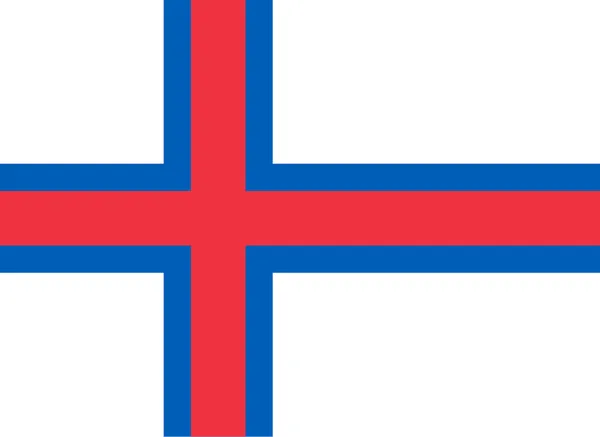
The Faroe Islands ( FAIR-oh), also known as the Faroes, are an archipelago in the North Atlantic Ocean and a rigsdel ('autonomous territory') of the Kingdom of Denmark. Located between Iceland, Norway, and the Hebrides and Shetland isles of Scotland, the islands have a population of 54,870 as of November 2025 and a land area of 1,393 km2 (538 sq mi). The official language is Faroese, which is partially mutually intelligible with Icelandic. The terrain is rugged, dominated by fjords and cliffs with sparse vegetation and few trees. As a result of their proximity to the Arctic Circle, the islands experience perpetual civil twilight during summer nights and very short winter days; nevertheless, they experience a subpolar oceanic climate and mild temperatures year-round due to the Gulf Stream. The capital, Tórshavn, receives the fewest recorded hours of sunshine of any city in the world at only 840 per year. Færeyinga saga and the writings of Dicuil date initial Norse settlement in the early 9th century, with Grímur Kamban recorded as the first permanent settler. The islands were initially believed to be mainly settled by Norwegians and Norse-Gaels who also brought thralls (i.e. slaves or serfs) of Gaelic origin, as with Iceland; this was disproved by a 2024 study, which found the origins to be different. Initially governed as an independent commonwealth under the Løgting, the islands came under Norwegian rule in the early 11th century after the introduction of Christianity by Sigmundur Brestisson. The Faroe Islands followed Norway's integration into the Kalmar Union in 1397 and came under de facto Danish rule following that union's dissolution in 1523. Following the introduction of Lutheranism in 1538, the Faroese language was banned in public institutions and disappeared from writing for more than three centuries. The islands were formally ceded to Denmark in 1814 by the Treaty of Kiel along with Greenland and Iceland, and the Løgting was subsequently replaced by a Danish judiciary. Following the re-establishment of the Løgting and an official Faroese orthography, the Faroese language conflict saw Danish being gradually displaced by Faroese as the language of the church, public education, and law in the first half of the 20th century.
Also on this shelf
Alps.
Ahura Mazda.
See also
Uncatalogued shelfText from Wikipedia; plate via Wikimedia Commons. Text CC BY-SA 4.0; plate freely licensed (see Commons). Source record. Images and catalogue data are reproduced from open-access collections.