Textiles and Dress
Greenock stowaways
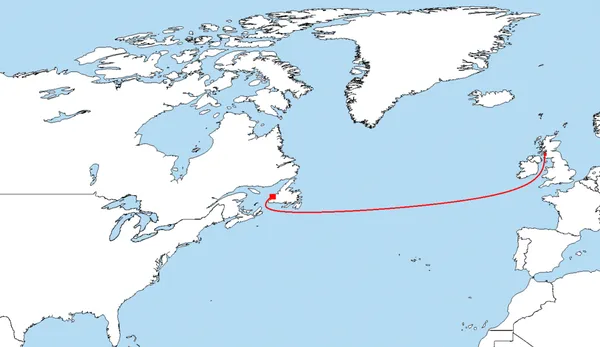
The Greenock stowaways, or Arran stowaways, were six boys (Hugh McEwan, 11; John Paul, 12; Peter Currie, 12; Hugh McGinnes, 12; David Brand, 16; James Bryson, 16) and one young man, Bernard Reilly, 22, who, in April 1868, stowed away at Victoria Dock in Greenock, Scotland, on a cargo ship, the Arran, bound for Quebec, Canada. They were dressed in thin and ragged clothing totally unsuitable for the bitterly cold North Atlantic weather encountered on the voyage; two of the boys (John Paul and Hugh McGinnes) lacked any shoes. On board ship they were lashed, beaten, starved, sometimes stripped naked or near-naked, had ice-cold sea water thrown over them, were generally ill-treated and, on occasion, handcuffed. All the stowaways were regularly beaten except Peter Currie, whose father was a friend of first mate James Kerr. James Bryson was subjected to torture. When, after a little over one month at sea, their vessel became trapped in sea-ice off the west coast of Newfoundland, the captain ordered that six of them should be put overboard and told to make their way to shore across the ice. The seventh stowaway, Peter Currie, was allowed to remain on board. For the poorly nourished boys in flimsy clothing the trek across the ice was likely to result in their deaths, especially so for the two 12-year-old boys who were forced to walk over the ice in their bare feet. In fact two of the boys, McGinness and McEwan, died on the ice; the remaining four stowaways survived because they were, by chance, spotted by a woman on the shoreline (Catherine Ann Gillis-MacInnis) and rescued by local Newfoundland men. All four were snow-blinded, taking almost a week to fully recover their sight. John Paul, who had to walk on the ice in bare feet, survived the trek, but his badly lacerated feet needed almost a month to heal. When news of these events reached home, a national scandal resulted. On its return to port, the Arran was met by an angry crowd; the captain of the ship, Robert Watt, and his first mate, James Kerr, had to be escorted off the ship by police. Watt and Kerr were tried in November 1868 at the High Court of Justiciary in Edinburgh, Scotland's highest criminal court.
Also on this shelf
Headscarf controversy in Turkey.
Diablada.
See also
Uncatalogued shelfText from Wikipedia; plate via Wikimedia Commons. Text CC BY-SA 4.0; plate freely licensed (see Commons). Source record. Images and catalogue data are reproduced from open-access collections.